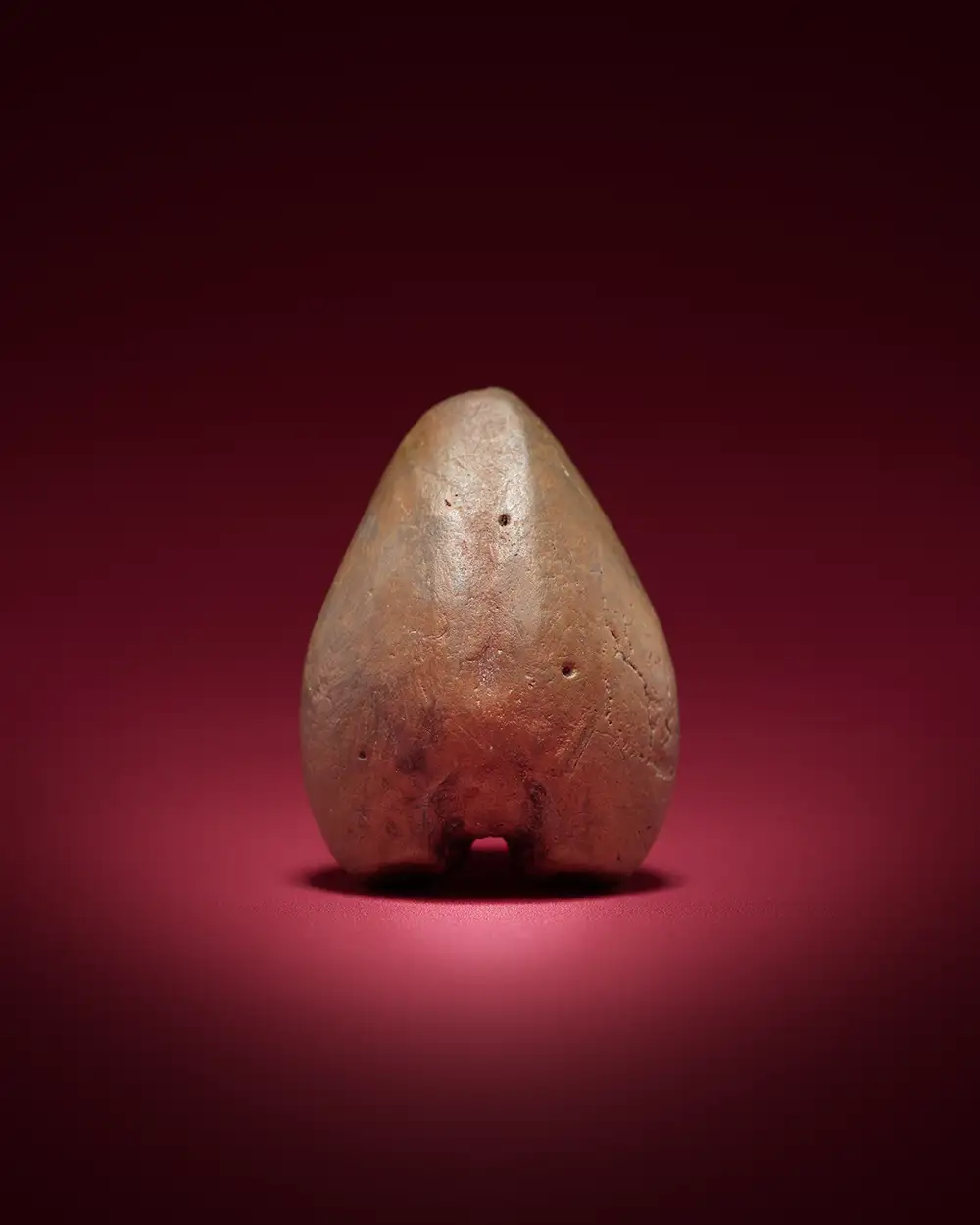
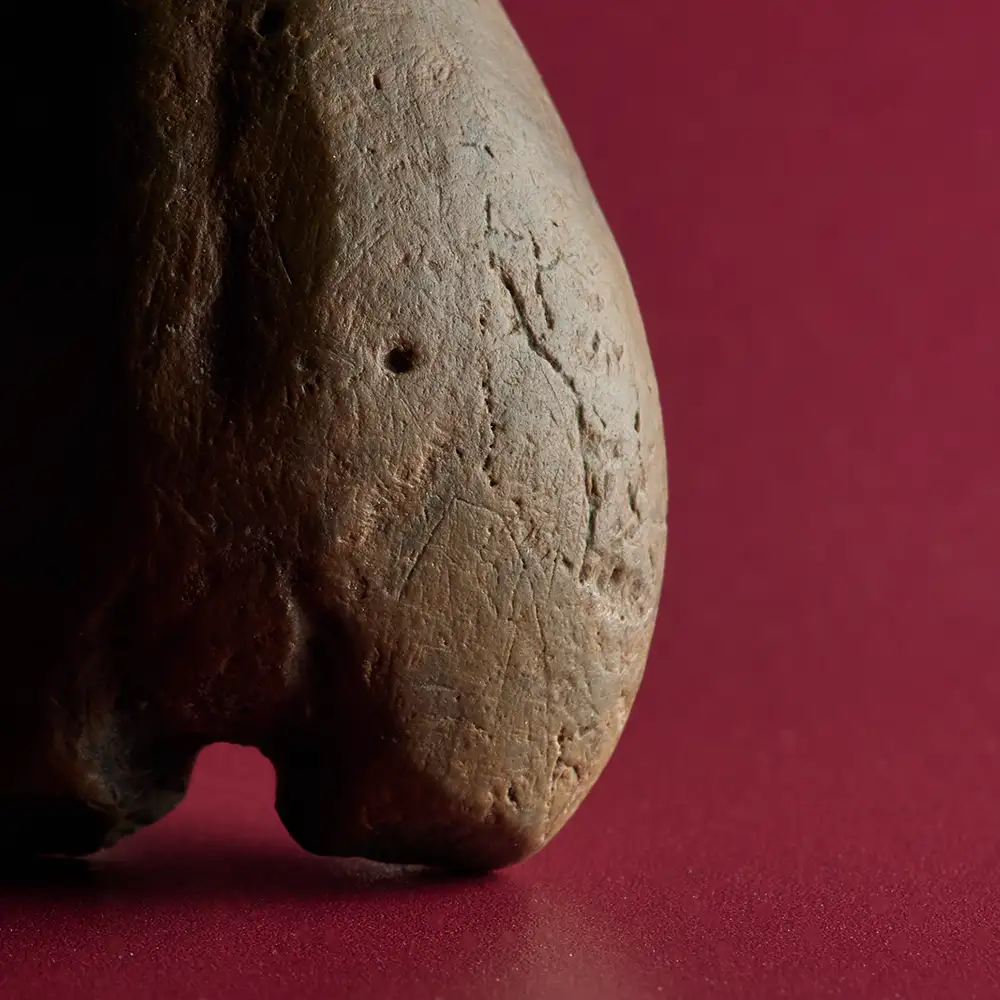
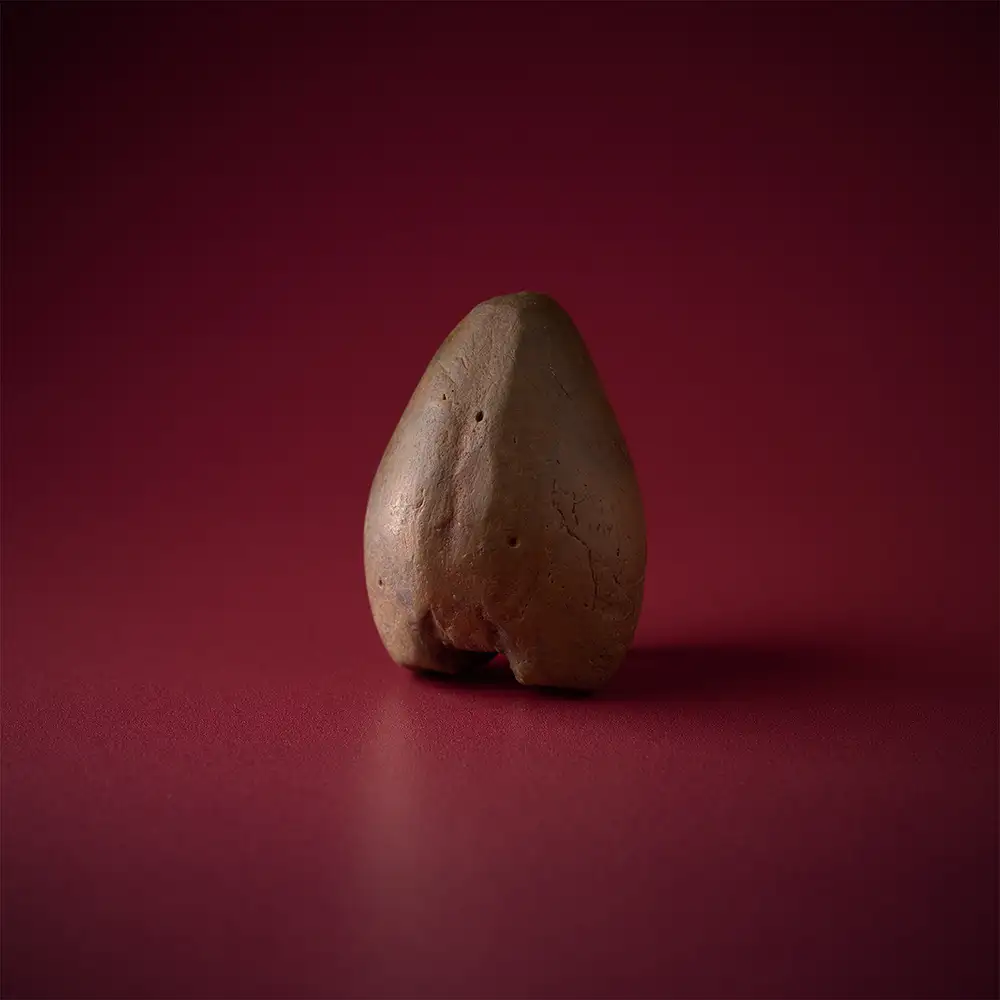
This figure resembles a woman’s hips. It is made from a fossilised shell that has been carefully polished. The fossil is naturally heart-shaped, and we can see that the person who turned it into a figure worked it with great care. The underside has been ground flat so that the figure can “stand”. The front has been flattened, highlighting the belly and genitals.
Venus?
So-called Venus figurines are a collective term for small sculptures of female bodies from Stone Age Europe. They typically emphasise female features such as the breasts, belly, buttocks and genital area, while arms, legs, heads and faces are often omitted or represented only schematically.
Were Venus figurines fertility symbols, made to ensure abundant nature and many children? Many archaeologists interpret them in this way. However, we cannot know for certain what the people who made the figure actually thought or intended it to represent.
About the object
- Material: Fossilised shell, type Cyrtodontula, shaped into a figure
- Findspot: Svinesund, Halden, Østfold, Norway
- Date: 6500–6200 BC
- Dimensions: 3.7 cm high, 2.7 cm wide
- Museum no.: C53850/57
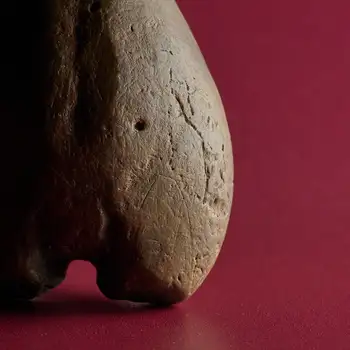
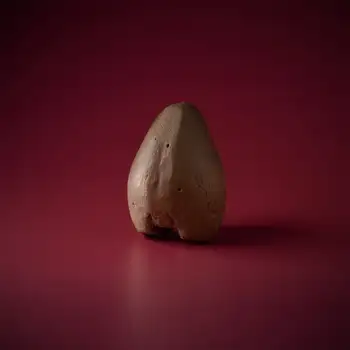
Found on Svinesund Island
The Venus from Svinesund was discovered in 2002, when archaeologists were excavating in connection with a new route for the E6 motorway towards the swedish border—hence its name.
It was found in a wooded area at Torpum, in a landscape that had largely remained undisturbed since the Stone Age. Eight thousand years ago, the sea level was around 50 metres higher than it is today, and the area was an island. Its proximity to the sea was the great advantage of “Svinesund Island”. Here, people had access to seals, whales, fish and seabirds—and probably also plentiful game inland. Researchers believe that the people on Svinesund Island lived well, without having to struggle to obtain enough food.
People in this period lived in small hunter-gatherer communities and were beginning to establish more permanent settlements. Some built huts where they could live for longer periods and return year after year.
Could the Venus from Svinesund have been someone’s valued possession, carried from place to place?












