Within both traditional woodcarving and tattooing, Gell noted the frequent occurrence of shapes associated with the eyes, face and the front of the body. Decorations were very often dual (Janus figures) and totally covered the surface of the object.
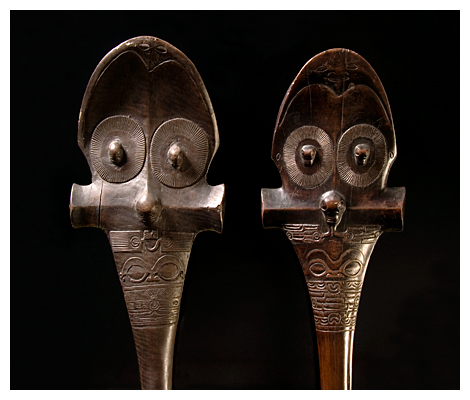
The twin clubs shown here are examples of Janus-faced objects in which the protective eye and face motif decorates both sides of the club.
The Marquesas Island man (seen here in an 1813 drawing by the Russian explorer Georg Heinrich von Langsdorff) shows the characteristic preference for covering the entire body in tattoos.
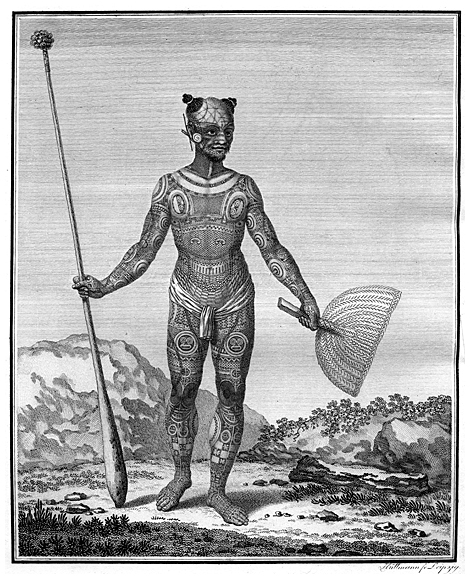
In his interpretation, Gell links this style of expression to a worldview where both people and objects are constantly threatened by strong forces of chaos. In his view, the patterns may have been intended to protect the integrity of entities by decorating them with powerful images fortifying their borders.












