River deep, mountain high
O Lord, heavenly father, let the angels watch over thy servants that they may reach their destination in safety (…) that no enemy may attack them on the road, nor evil overcome them. Protect them from the perils of fast rivers, thieves, or wild beasts.
– 12th century pilgrim’s blessing
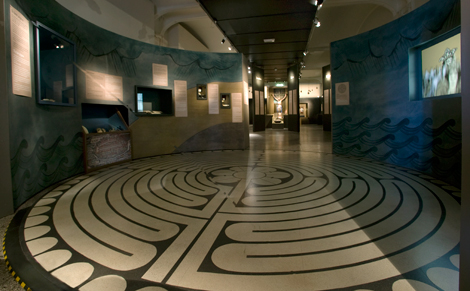
A long journey in the Middles Ages was no easy venture. Pilgrims faced hundreds of miles of bad roads, rushing rivers, steep mountain passes, wild animals and ruthless bandits. The journey by sea was no less perilous. Storms and still winds could be equally troublesome, and there was always the danger of being attacked by pirates of other foes. There was also the ever-present threat of war, epidemics and political unrest. Despite the dangers and discomforts, thousands of medieval men and women went on pilgrimages..
Keeping company
Take care, then, not to join up with bad companions for however pleasant they appear, you never know what evil will befall you.
– Phillipe de Remi Beaumanoir
Pilgrims seldom travelled alone. Travelling in groups offered both protection and company. On the busy roads to Rome and Santiago de Compostela, it was, in fact, hard to avoid meeting fellow pilgrims. But pilgrims were advised to take care when choosing travelling companions. There was no shortage of stories about robberies and murders committed by “false pilgrims”.
Rough Guide
Medieval pilgrims could consult guide books known as “itineraries”. These gave information about routes and distances that could be covered in a day’s journey. They also described towns and other attractions along the way, recommended places to eat and sleep and warned of the dangers and obsticals pilgrims might encounter.
Places to stay
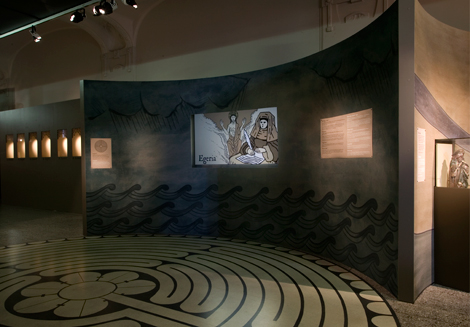
A guide book to the road to Santiago de Compostella from the mid-12th century tells pilgrims that they can find food and lodgings at the large hospices run by religious orders. Hospices were often built in places where they were most needed, such as the famous St. Bernhard’s Hospice in the Alps.
Before you go
He that be a pilgrim oweth first to pay his debts, afterwards to set his house in governance, and afterwards to array himself and take leave of his neighbours, and so go forth.
– Richard Alkerton, 1406
Pilgrims had special rights and privileges that other travellers did not enjoy, and were exempt from many of the usual social constraints and obligations. They had the right to make a will and name an heir, a privilege that was usually reserved for only a few. The church looked after the pilgrim’s family while they were away and if they never came back. On the road, pilgrims were entitled to safe passage, food and shelter.
Pilgrimages were also expensive. People often had to sell land or property to raise money for the trip. When Bothild Arnesdatter decided to make a pilgrimage to Rome she sold part of her farm to her husband, Olaf Petersson. He, in turn, sold the property to St. Hallvard’s cathedral in Oslo for a sum the equivalent of around 500 000 Norwegian crown in today’s money.
Three medieval documents from Norway
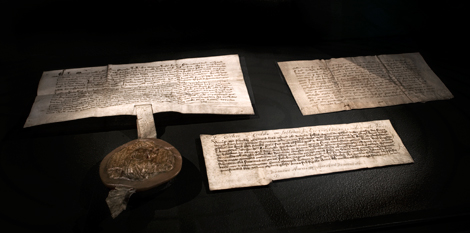
Passport for pilgrims
Pilgrims received protection from both King and Church. To the left we see a letter granting safe conduct to pilgrims travelling to St. Olaf’s shrine in Nidaros Cathedral in Trondheim issued in 1297 by the Norwegian king Eirik Magnusson. To the right is a letter from 1390 issued by Jon Ogmundsson, a priest from Fron in Gudbrandsdalen. He asks that his parishioner, Eindride Halvardsson, be given hospitality while on his pilgrimage to Vadstena Monastery (St. Birgitta’s shrine) and “other holy places”.
Wills
Many pilgrims made wills before setting off. This will (in front) from 1390 was made by a woman from Oslo before she went on a pilgrimage to Rome. She bequethed her property to St. Mary’s church on the condition that masses be said for her soul each year, and that one Sigrid Bjarnesdatter be allowed to stay on the premises for as long as she lived.
Loan: The National Archives
Clausura – mini-trips
Wealthy and influential people could leave their homes and go on long and lengthy pilgrimages. The poor and sick often had to follow other roads to redemption. They could make mini- pilgrimages (Clausura) to local shrines and sanctuaries, make offerings or do good works.
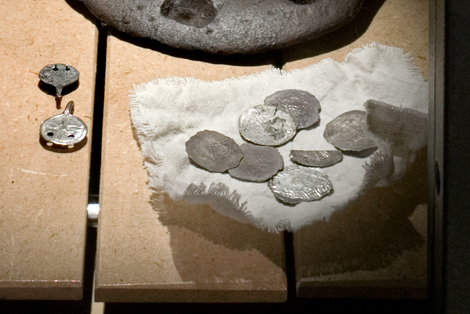
Offerings in Lom?
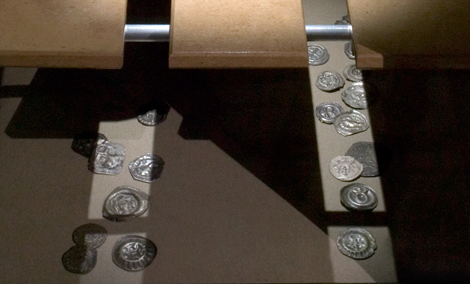
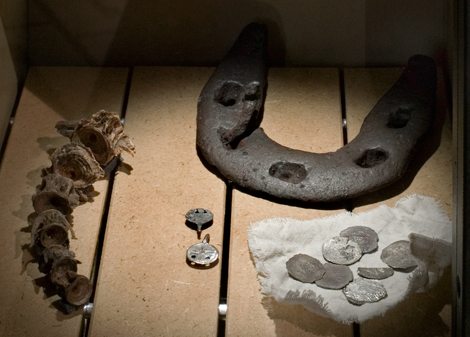
More than 15,000 coins have been found under the floor-boards of churches in Norway. These coins were found under the floor of the stave church in Lom. Did they accidentally slip from the hands of the parishioners during the collection? Or were they intentionally placed between the floorboards as offerings to higher powers?
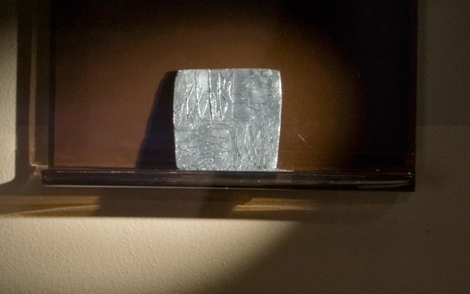
”Pater noster"
A priest could grant forgiveness for minor sins if the sinner truly repented. Prayers like “Pater Noster” (the Lord’s Prayer) might be prescribed as a penance. To be absolved from a graver sin demanded more, and penance could involve giving alms to the poor or making a pilgrimage to a holy shrine.
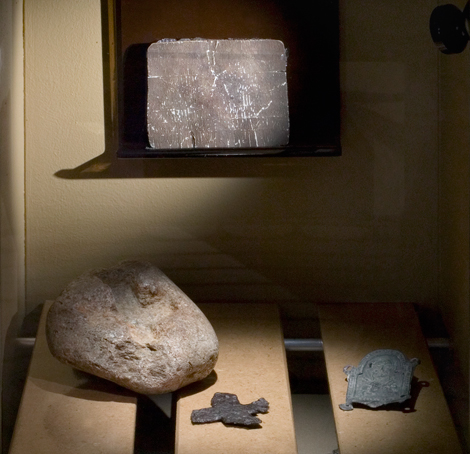
Cross and soapstone mould. Lead tablet with the “Pater noster” written in Latin in runes. Ulstad, Lom, Oppland.
From Bari to Lom
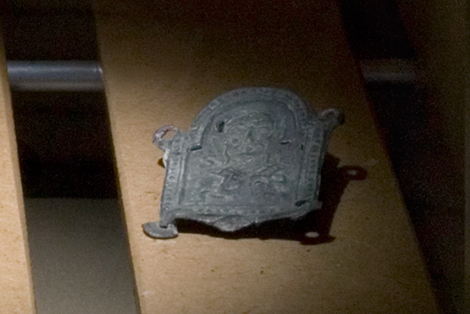
This pilgrim badge of St. Nicholas of Bari (Italy) was found in the stave church in Lom. Was it a souvenir brought back by a pilgrim from Lom, or did it belong to a pilgrim who was just passing through?
A pilgrim´s hostel in Norway
There were also inns and hostels where pilgrims could pay to stay. In Norway, archaeologists excavated the site of a mountain lodge at Vesle Hjerkinn in the Dovre mountains. Vesle Hjerkinn lies on the old road that led over the mountains between southern Norway and Nidaros (Trondheim).
The case of the missing coin purse
Running repairs
Fish on Friday?
Cod and herring bones found at Vesle Hjerkinn show that sea fish, probably salted and dried, was carried to the mountains. It was important for pilgrims to hold the fast on Fridays and keep to a simple diet while on the road.












