Ave Maria
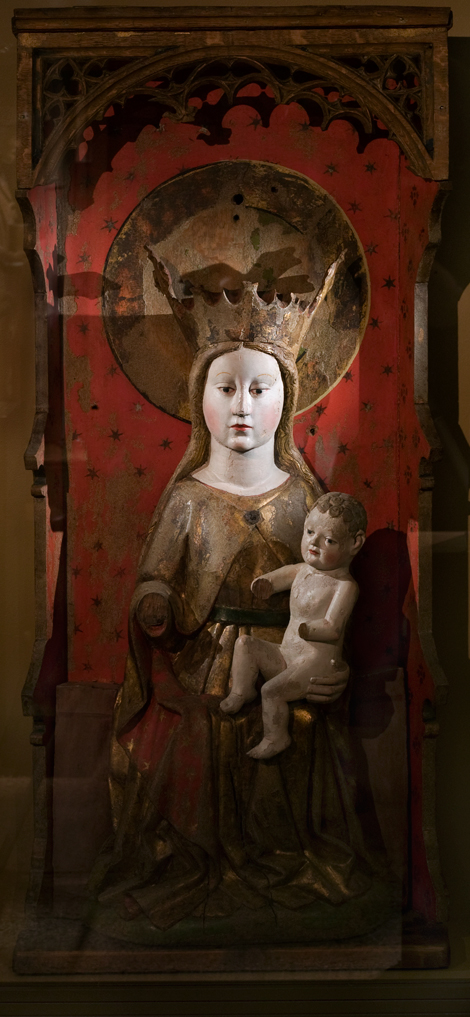
The Virgin Mary is a good example of what it means to be a saint. When the angel Gabriel came to Mary with the message that she was to be the mother of God’s son, she replied; “I am the Lord’s servant. Let it come to pass as you have said”. A saint is certain that God know best and does not hesitate to do God’s bidding.
The Virgin was venerated throughout the medieval Christian world. As a mother, she protected the baby Jesus, and embodies compassion and mercy. She could intercede on behalf of sinners and even save the irredeemable.
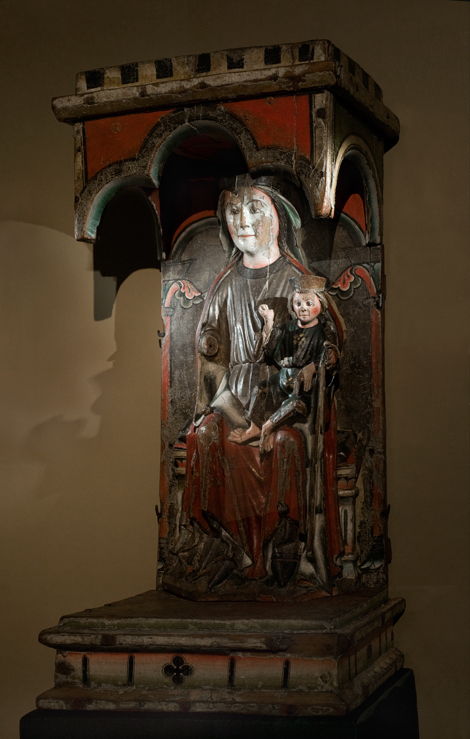
Himmelens dronning
The Virgin Mary was the most popular of saints and a figure of her was found in almost every parish church. The sculptures were often framed in a tabernacle. On her saint's days the doors of the tabernacle were opened and people could view the beautiful mother and the baby Jesus.
Lisence to kill
Every man who sets out for Jerusalem with the army to liberate the Church of God shall have the entire penance for his sins remitted.
– Urban II, Pope from 1088-1099

In 1095 Pope Urban II declared a holy war. He called for a crusade to secure passage to the Holy Land and free Jerusalem from Muslim control. He promised that those who went to fight the “the infidel” would be exempt from doing penance for their sins for all eternity – a promise that guarantied salvation. The Pope’s call was met with unexpected enthusiasm. In the following centuries the Crusades were used as a way to Heaven for thousands of Christians in Europe.
The Crusaders thought of themselves as pilgrims - they had the same goals, visited the same places, and performed the same rituals. But the idea that war was a holy action, and that by killing “the enemies of God” one earned an unconditional indulgence, was radically new. It was as if the Crusaders were offered a “package deal” for salvation, an idea far removed from the concept of a pilgrimage as a personal and spiritual journey.
Hospitalers and Templers
The Hospital of St. John was founded in Jerusalem in the middle of the 11th century to care for the growing numbers of pilgrims in the Holy City. It was run by a new order of monks, the Hospitalers. Paradoxically, they were also a military order and the monks were specially trained soldiers whose role was to protect pilgrims – by force of arms.
Aquamanile with knight from Helgeland, c 1300
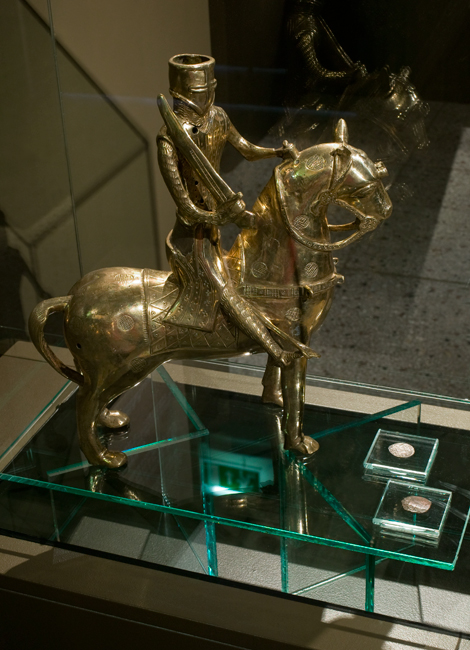
Aquamaniles (from the Latin “aqua” = water and “manus” = hand) were metal water containers that was used during Mass. This vessel of bronze is in the form of a knight on horseback, a type that has its origins in the Islamic Middle East. The Crusaders brought them to Europe in the 12th century..
Coins
- Crusader king Richard Lionheart from England, 1189 – 1199
- Abbasidian dirhem from Zangid in Aleppo (today’s Haleb in Syria), 1166 – 1185.
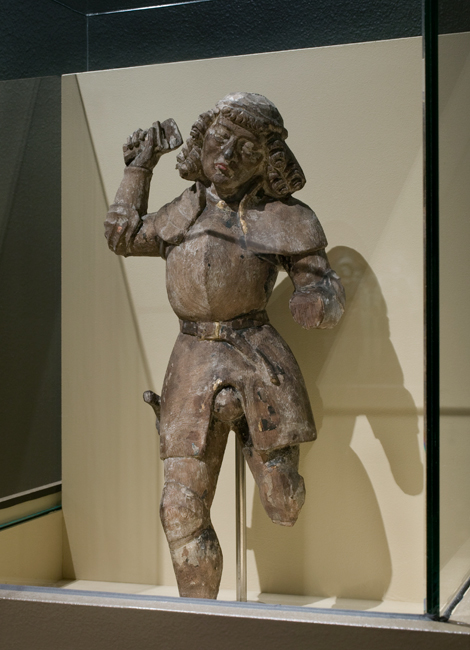
Sankt Georg – the patron saint of soldiers
St. George is the patron saint of soldiers, knights, horses, archers, weapon-smiths, butchers and journeymen. He also protects against the plague and syphilis.
Pilgrims and plagues
The Black Death arrived in Europe in 1348 and spread rapidly. By the end of 1349 it had reached Dublin in the west, Dubrovnik in the east, Bergen in the north, and Seville in the south.
The epidemic affected pilgrims in a number of ways. Pilgrims were suspected of spreading the disease and often found city gates closed against them. It also became more difficult to find food and lodging after villages were abandoned and monasteries closed.
The belief that the Black Death was a sign of the wrath of God, aroused intense religious fervour. Fear of Hell and the Day of Judgement gave rise to an extreme type of pilgrim – the Flagellants. These were bands of men and women who roamed from town to town whipping themselves until blood flowed, punishing themselves to drive away sin and evil.Others tried to find someone to blame for the pestilence.
The most common scapegoats were the Jews, who were accused of starting and spreading the disease. Jews were persecuted, tortured and killed all across Europe.
The suffering Christ
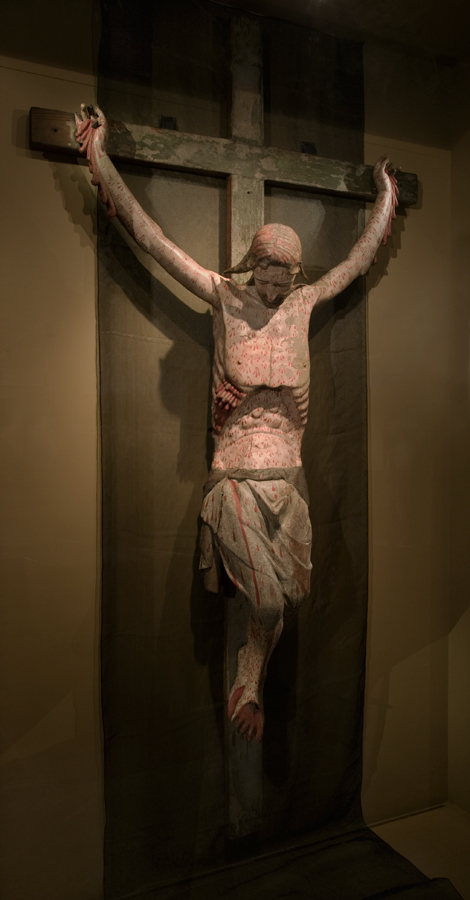
The crucifix from Tretten church shows how religious art became darker and more somber in the years after the Black Death. A bleeding Christ suffers for a world full of sin and sadness. The paint on his knees has been rubbed off by the many hands that have touched the figure. Tretten chuch, located in theGudbrandsdal Valley, must have been an important stop for those who followed “the Pilgrims’way” to Nidaros.