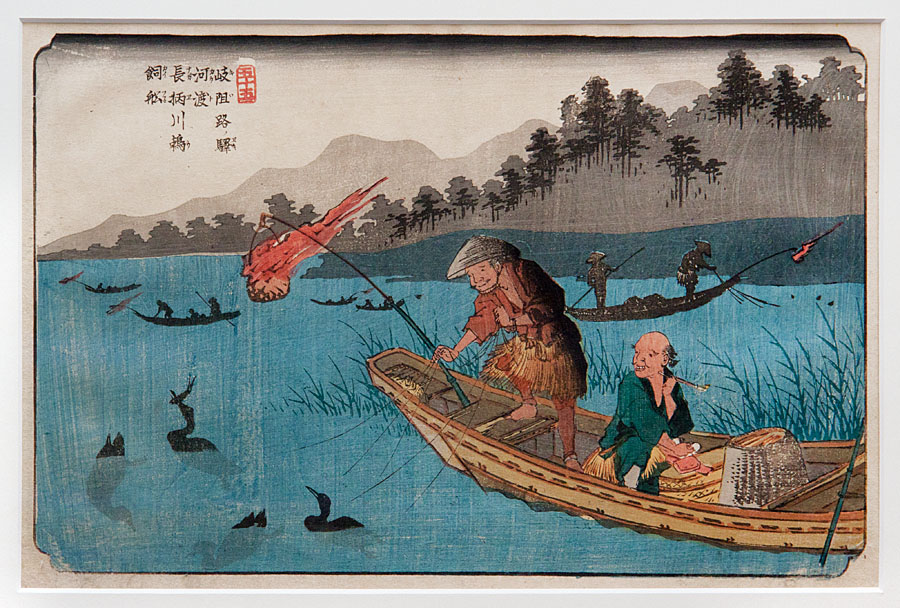
- Series: “The Sixty-Nine Stations of the Kisokaidô Road”
- Kisoji no eki 木曾路ノ驛 c 1836–37
- Signature: no
- Merker: no
- Publisher: Takenouchi Magohachi 竹内孫八 (Hoeidô; active c 1833-1850)
- Format: horizontal large print (ôban yoko-e)
- Medium: multicolor woodblock prints (nishiki-e); ink and colors on paper
Eisen portrays a fishing method using domesticated cormorants. It has been practiced in some places of Japan for the past 1,300 years. A snare around the neck of the bird ensures that it can only swallow the smaller fish. The bigger ones, of the ayu variety (sweetfish) are disgorged by the bird once brought back into the boat by the fisherman. Watching this is is also an Imperial pastime. Members of the imperial family visit the Nagara River during the 5 months of fishing. The first catch of the year goes to the Imperial Palace.
Eisen was the son of a painter of the Kanô School. He was not only a print-maker, but also a poet. This landscape presents part of the Kisokaidô road (or Nakasendô = Central Mountain Road), the inland highway between Edo (present-day Tokyo) and Kyoto. Eisen started a series of pictures of this road but only got as far as number 11. Hiroshige completed the series. Although Eisen was a landscape artist, he may have been more famous for his bijin-ga, pictures of beautiful women.
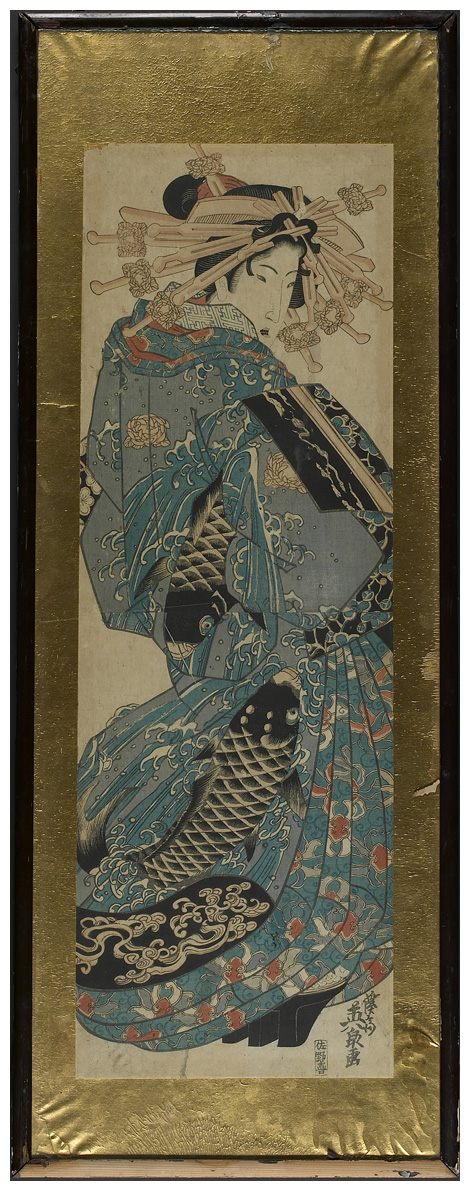
- c 1830–44
- Signatur: Keisai Eisen ga 渓斉英泉画
- Marks: publisher’s seal
- Utgiver: Sanoya Kihei 佐野屋喜兵衛 (Sanoki, Kikakudô; active c 1830s)
- Format: upright diptych print (kakemono-e)
- Medium: multicolor woodblock print (nishiki-e); ink and colors on paper
A world of consummate elegance: Eisen portrays a prostitute in all her splendor. She is probably a high-class oiran. In feudal Japan she would have been a sex worker through bondage. But the ukiyo-e master portrays her as a bearer of good taste in grooming, dress, and comportment. Her expensive kimono carries bold imagery: of a carp swimming upstream. Her ornamental hairpins are truly exquisite.
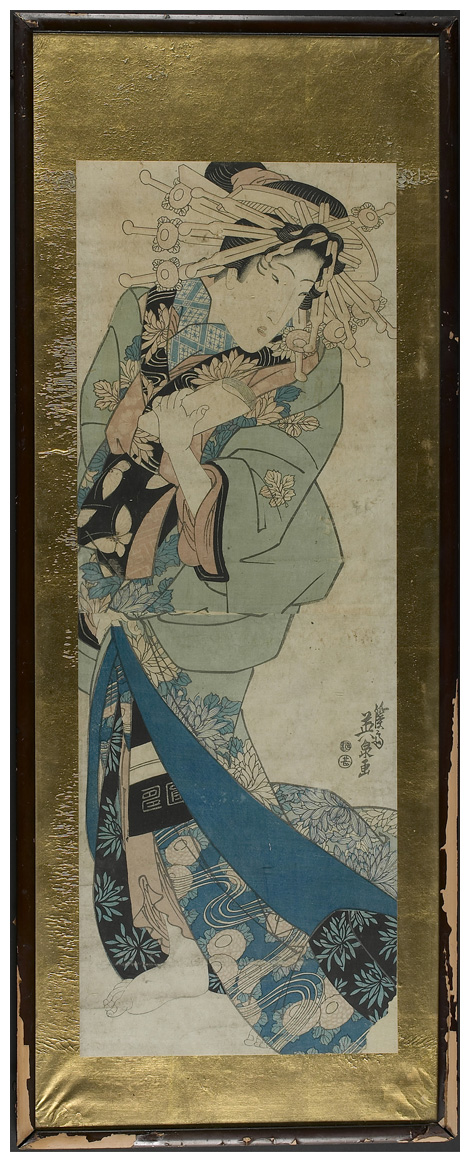
- c 1830–44
- Signatur: Keisai Eisen ga 渓斉英泉画
- Marks: censor’s seal (kiwame), publisher’s seal
- Utgiver: Maruya Jimpachi 丸屋甚八 (Marujin, Enjudô; active c 1770–1842)
- Format: upright diptych print (kakemono-e)
- Medium: multicolor woodblock print (nishiki-e); ink and colors on paper
The bijin-ga "beautiful person" prints made by Eisen sustain allusion. The prostitute carries a bundle of paper sheets. Usually fastened to the sash, these were used to wipe the body after the sexual encounter. The illusionist feat is to describe something which is yet to happen.
A strictly regulated feudal society might not have put much value on romance and eroticism as part of the marriage contract. The mizushôbai ("water business") in some quarters of Japanese cities today is one indication that the sociology of this feeling of constraint – even between husband and wife – is still a reality of some sort.
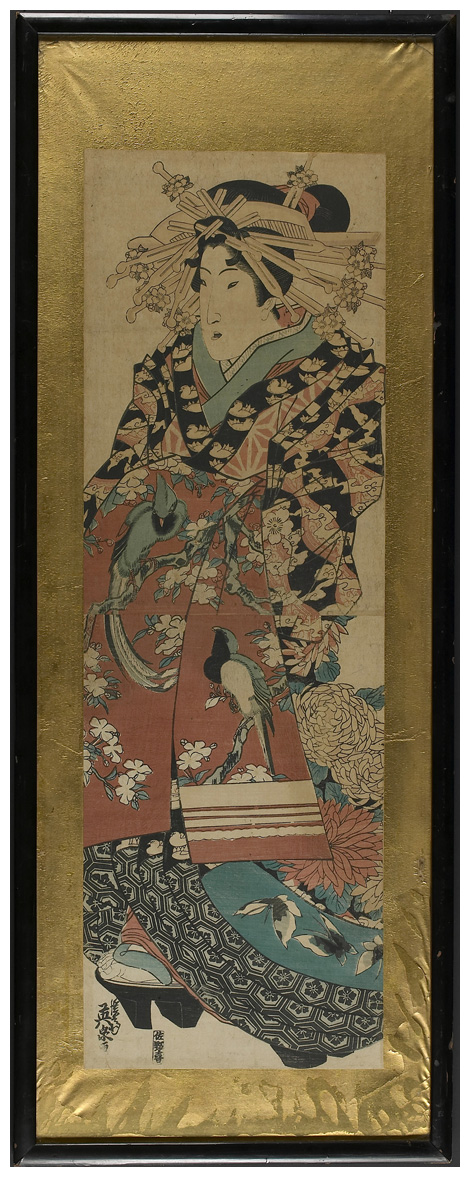
- c 1830s
- Signatur: Keisai Eisen ga 渓斉英泉画
- Marks: publisher’s seal
- Publisher: Sanoya Kihei 佐野屋喜兵衛 (Sanoki, Kikakudô; active 1830s)
- Format: upright diptych print (kakemono-e)
- Medium: multicolor woodblock print (nishiki-e); ink and colors on paper
A literal translation of Eisen's title would go like this: "The Magpie Playgirl." The pattern on her kimono tells something about her situation. The symbol of the magpie originated in China and indicates luck; it augurs a welcome event.
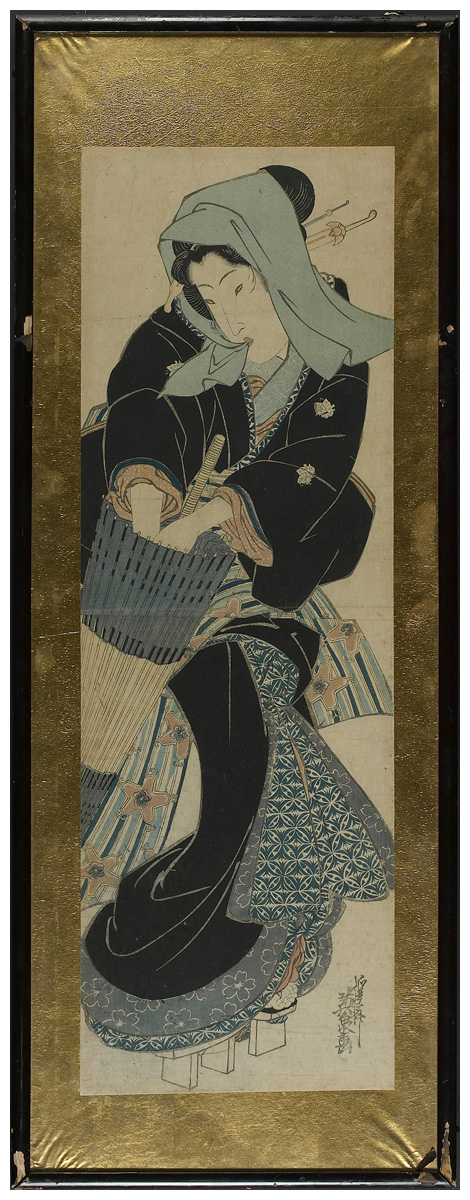
- c 1804–18
- Signatur: Keisai Eisen ga 渓斉英泉画
- Marks: no
- Utgiver: not known
- Format: upright diptych print (kakemono-e)
- Medium: multicolor woodblock print (nishiki-e); ink and colors on paper
Kunisada captures the movement in the moment: a woman is opening her umbrella, a fold of her scarf gets caught in her mouth. In this way, eroticism is added to a scene which at first glance appears trivial.












