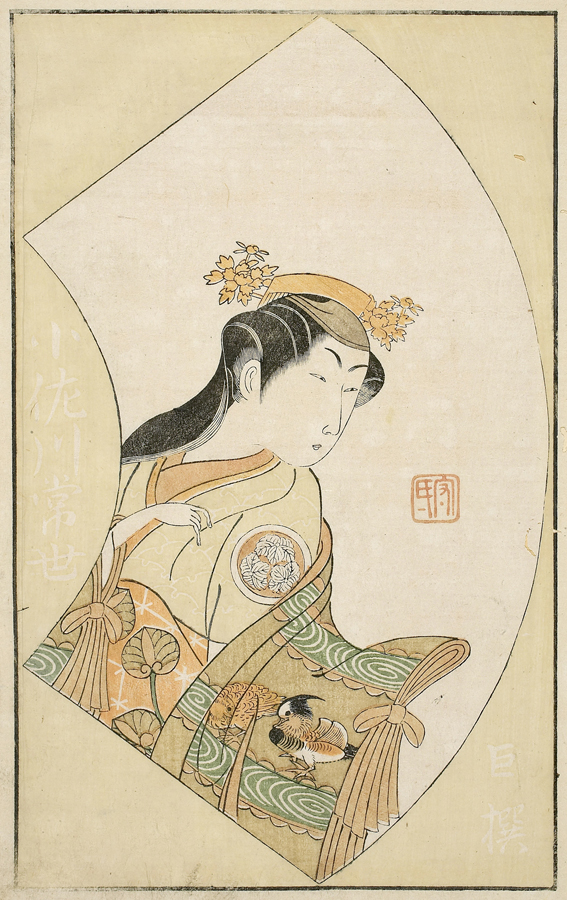
- Book: “Picture Book of Stage Fans” Ehon butai ôgi 絵本舞台扇 executed together with Katsushika Shunshô 勝川春章 (1726-92) 1770
- Publisher: Kariganeya Ihei 雁金屋伊兵衛 (active c 1770s)
- Signature: no
- Marks: artist's seal Mori uji 守氏
- Format: book page
- Medium: book page of the illustrated printed book (ehon), multicolor woodblock print (nishiki-e); ink and colors on paper
The ukiyo-e artist Ippitsusai Bunchô was known for his pictures of stage actors. The book illustration (one of Ippitsusai’s preferred mediums) shows the popular kabuki actor and dancer Osagawa Tsuneyo II doing a trans-gender impersonation. The portrait has the format of a stage fan. This actor was also portrayed by Toyokuni. Bunchô accentuates the character’s female gender with narrow, slanted eyes and a dot for the mouth
Originally, the kabuki stage play even allowed all-female actors, but since the intervention by the shogunate in stage art in 1629, they have been all-male. Still today, female impersonation is done by male actors. The authorities of the early years of the shogunate wanted to stop stage-related prostitution. But the steps they took only managed to shift the desires among the audiences from one gender to the other. The stars of the all-male shows began playing the roles of young women (wakaonnagata) and young men (wakashû). To some extent, the theater may have been an enclave for male prostitution, just as the Yoshiwara quarter of Edo became an enclave for female prostitution.












