The shrine of a modern saint
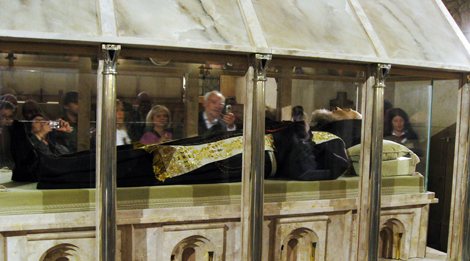
Every year, millions of people travel to the town of San Giovanni Rotondo in southern Italy. They come to visit not the grave of a medieval saint, but the tomb of the popular, but controversial priest Padre Pio, who lived here until his death in 1968.
Padre Pio was born in 1887. He was a sickly child, but with a strong faith in God. In 1918, he received the stigmata (marks on his palms like those of Jesus on the cross), as did Francis of Assisi many centuries earlier. For the rest of his life, Padre Pio was a priest in the Franciscan monastery in San Giovanni Rotondo. He spent much of his time ministering to those who came to see him. He took confession, wrote letters to believers and gave radio talks. In the 1950s he established a modern hospital in San Giovanni Rotondo.
Not everyone believed all the stories about Padre Pio’s miracles and his gift of healing. The Church was also sceptical, and for several years he was banned from holding mass. Eventually, in 2002, Padre Pio achieved recognition when Pope John Paul II declared him a saint.
Now thousands of people file past the crystal coffin of Padre Pio every day. Children are held as close to the beloved saint’s body as possible. His monastic cell has been preserved just as it was when he died. The sandals under his bed have been copied and are sold by the thousands in souvenir shops, along with holy oils and handkerchiefs that have been in contact with relics of the saint. Those who are not able to go on a pilgrimage to San Giovanni Rotondo can listen to radio and television broadcasts of Padre Pio on the Internet.
”To see what Buddha saw”
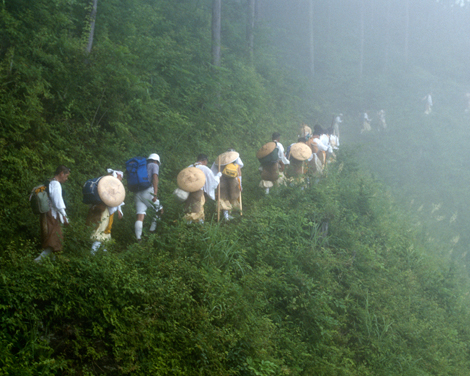
For more than 2000 years, people have made pilgrimages to the northern Indian city of Bodh Gaya. Here, in the shadow of a tree, Gautama Buddha achieved enlightenment. Many pilgrims also visit Lumbini, Buddha’s birthplace in the Himalayan foothills. Another important Buddhist pilgrimage site is the deer park in Sarnath where Buddha began his teaching. The last of the four classic Buddhist pilgrimage sites is Kushinagar, the place where Buddha died and attained the state of nirvana.
Although those who wish to take Buddha’s path to enlightenment do not have to go on pilgrimage, following in Buddha’s footsteps can be one of the ways of reaching this goal. After Buddha’s death, his remains were placed in circular buildings called stupas. Throughout the world, people go to visit stupas containing relics of Buddha and other great teachers. A famous pilgrimage destination is the Temple of the Tooth in Kandy, Sri Lanka, where one of Buddha’s teeth is kept.
The Buddhist temple at Løvenstad in Norway houses a fragment of Buddha’s bone. A peace stupa has been built at Bjørndal in Oslo in honour of the Dalai Lama. It contains relics from great Buddhist teachers.
"Welcome to my world"
When Elvis Aaron Presley died in Memphis in 1977, he was the world’s most successful recording artist. Millions of people had bought his records, attended his concerts and had gone to see his films. In 1982 the doors to Elvis’s home – Graceland – were opened to the public. His fans can now view his living room, his Gold Records and his white grand piano. But upstairs, where Elvis died, is closed to the public in accordance with his family’s wishes.
Graceland has become a tourist magnet and a national heritage site. The many visitors resemble the crowds thronging to other pilgrimage sites. Elvis’s grave in the garden, is covered with flowers. His fans want to get as close as possible to their idol. To wander through the rooms where Elvis once lived, and perhaps touch something that he had touched, can be an experience of a lifetime.
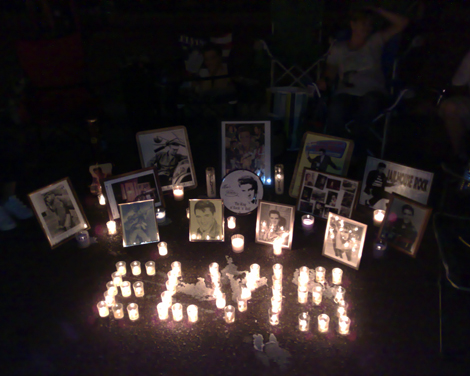
On the night of the anniversary of his death, August 16th, thousands of fans gather for a night vigil. They hold candles, and some openly weep. Both young and old describe Elvis’s charisma, as well as how he helped people in need. He never forgot that he came from humble origins.
There are many reasons why people choose to visit Graceland. Some come out of sheer curiosity, others want to express their gratitude to Elvis by writing a message on the wall surrounding the estate. One thing they all agree on is that his music has enriched their lives. The King is dead - long live the King!












