Calendar sticks came into use in the Middle Ages, and some used runes or symbols developed from runes. The first seven runes, f u þ o r k h, were used to indicate the days of the week. This tradition continued after the Norwegian Reformation in 1536
Not long after the Reformation, scholars began to take an interest in runes and wrote about them. Thus knowledge about runes spread. People ‘took up the runes’ again, but now based on book-learning. The inscriptions no longer belonged to a living tradition from the Middle Ages.
Today, runes appear in new settings and on mass-produced articles like the glass plate displayed here with motifs and runes from the Dynna stone. It was designed in 2009 by Maud Gjeruldsen Bugge at Hadeland Glass for ODIN Fund Management.
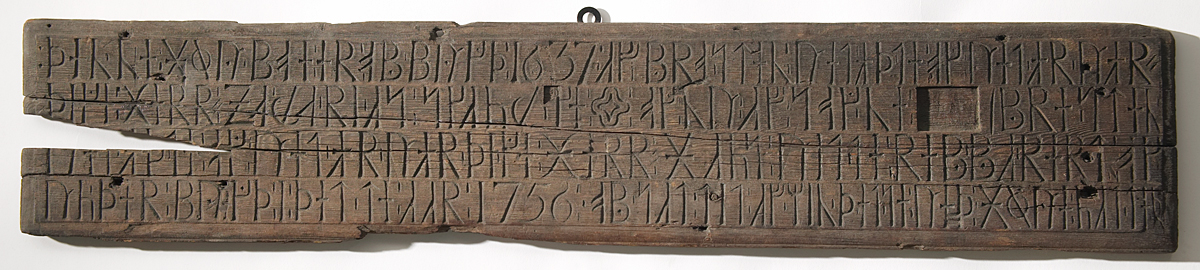
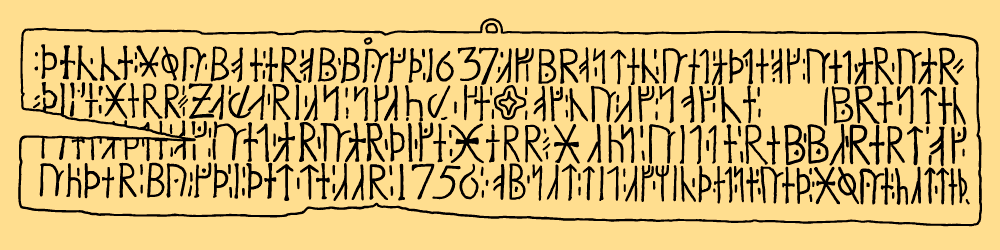
1. ‘This barn was built in 1637 by Pastor the Honourable and Venerable Mr. Zacharias Skancke, and now by Pastor the Honourable and Venerable Mr. Hans Wille repaired and the foundation redone in this year 1756. Erected as a reminder at Høye Natted(al).’ Plaque from Seljord parsonage. Dated 1756.



2. ‘f u þ o r k h [repeated]’ (runes and pseudo-runes). Calendar stick of unknown provenance. Dated 1739.
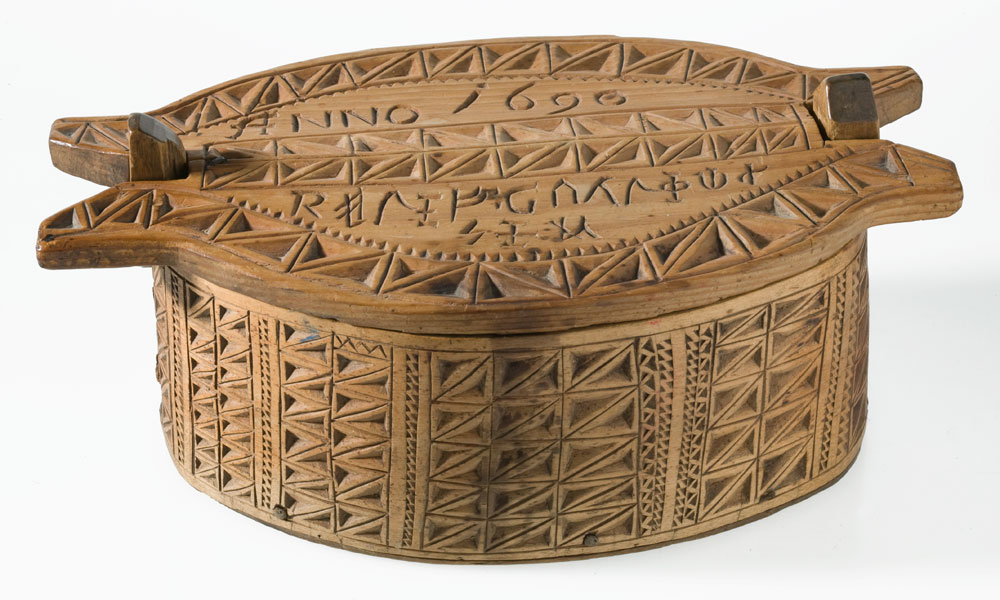
3. ‘Rollef Gunlecksen.’ Oval box from Håsom farm, Telemark (privately owned). Dated 1690.
Photo: Mårten Teigen © Museum of Cultural History
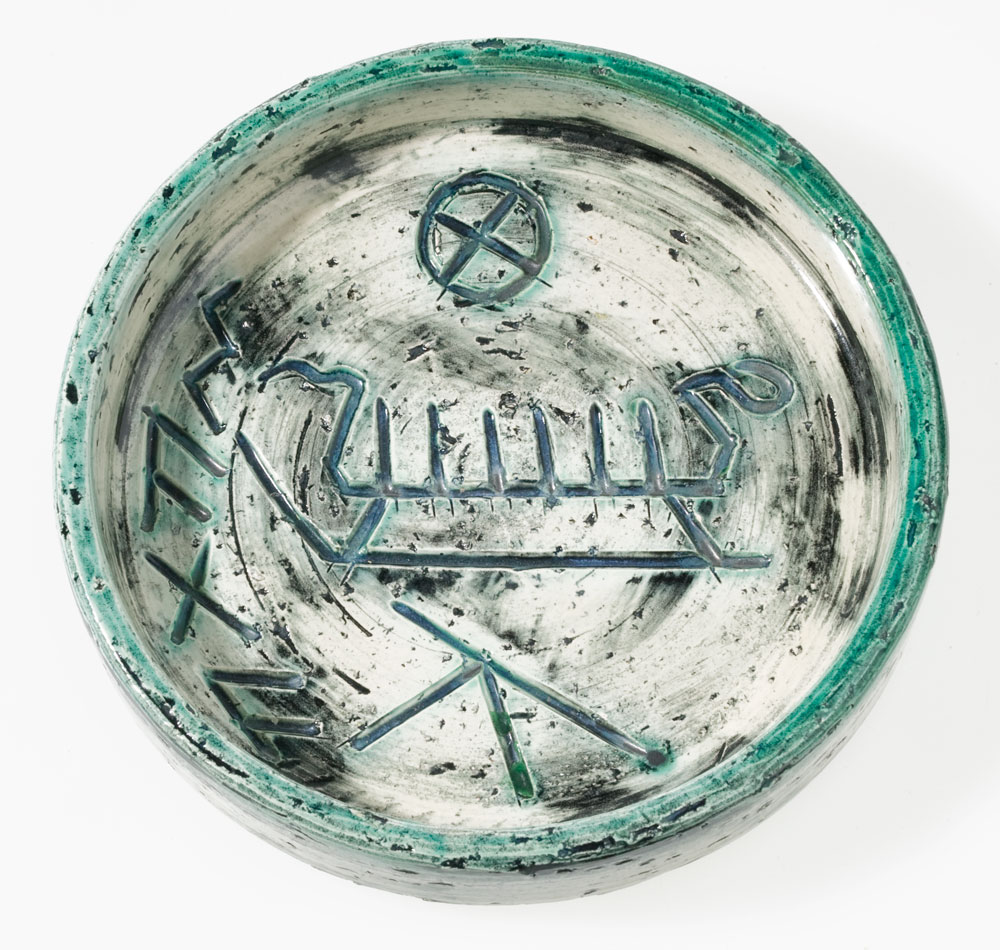
4. ‘Saga’ (older runes). Ashtray from Arol Ceramics in Halden. 1960s?
Photo: Mårten teigen © Museum of Cultural History
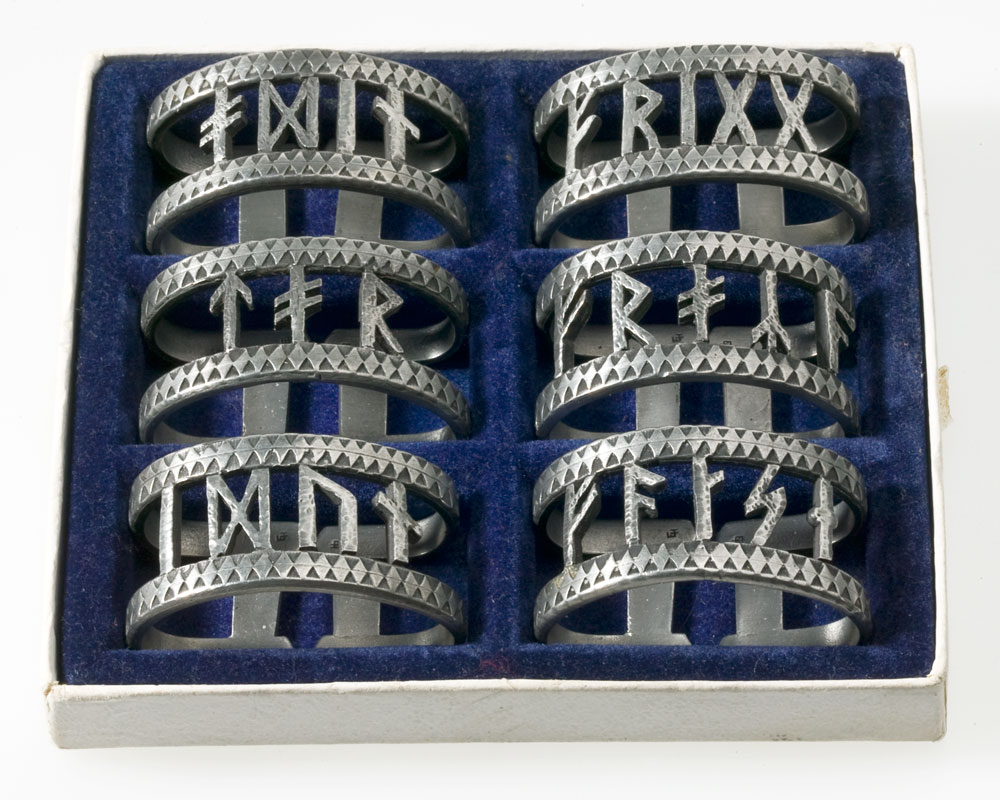
5. ‘Odin’, ‘Frigg’, ‘Thor’, ‘Froya’, ‘Idun’, ‘Fakse’ (mixture of rune-types). Napkin rings from ‘EH’, i.e. Eivind G. Hillestad, Aust-Agder. 1968.
Photo: Mårten Teigen © Museum of Cultural History
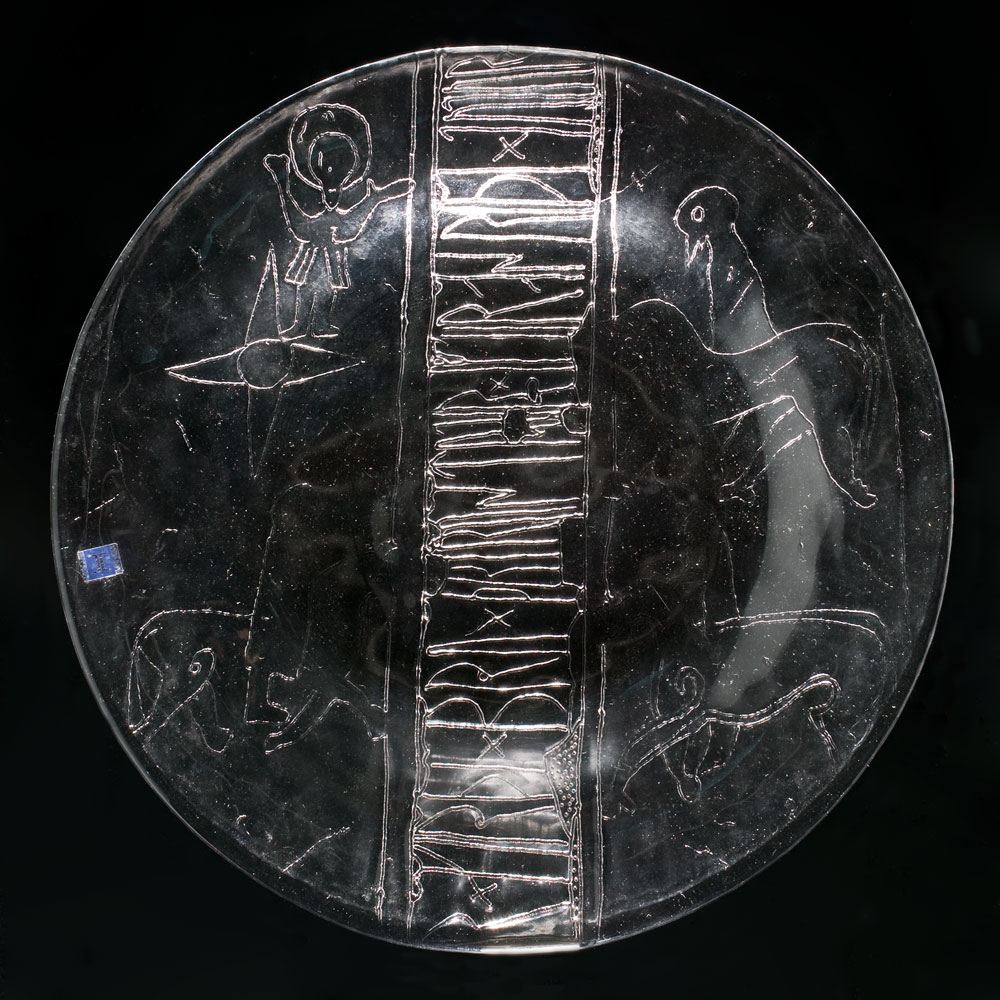
6. ‘(Gunnvö)r made a bridge, Þrýðríkr’s daughter, in memory of Ástríðr, (her) daughter.’ Plate with runes and motifs from the Dynna stone, Hadeland Glass. 2009. (See also the large dish at the entrance to the exhibition.)
Photo: Mårten Teigen © Museum of Cultural History
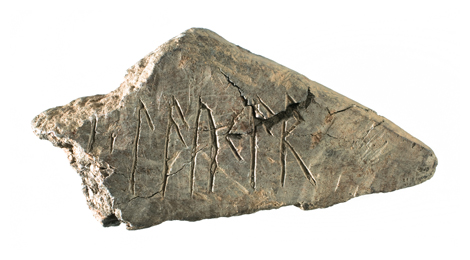
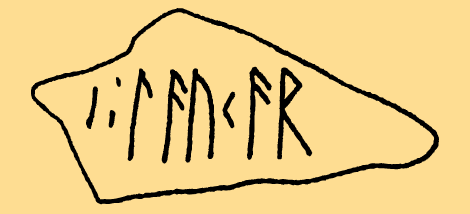
7. ‘Løk’ (magisk formel i eldre runer, feilstavet med -r for -R; forfalskning). Skår av klebersteinskar fra Brandval, Kongsvinger, Hedmark. Innlevert 1937.
Foto: Mårten Teigen © KHM












