Many runic inscriptions consist only of the runic alphabet. Some of these are perfectly written (see picture). Others have been corrected and show that the pupil had made a mistake, either in order or form. Correct order was particularly important for messages written in coded runes.
Many inscriptions contain only part of the futhork.Several consist of just fuþfuþ, corresponding to ‘abc’. But this might also be a play on words. In Old Norse fuð could mean the female sexual organ, the vagina.
Often texts simply tell us who carved the inscription, such as ‘Karl carved these runes’. Using this formula people also carved their names as graffiti in public places.
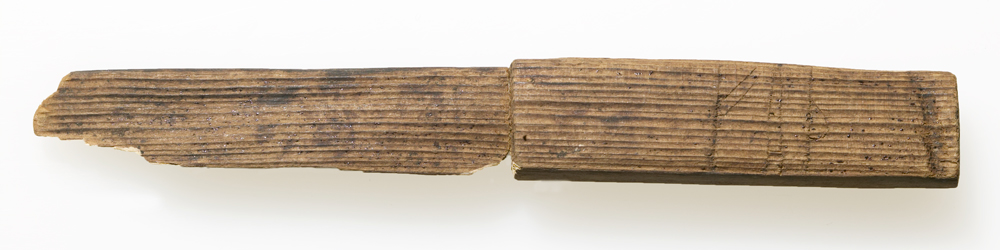

1. ‘fuþ’ (beginning of the futhork). Wooden knife from Oslo. 1175–1225.

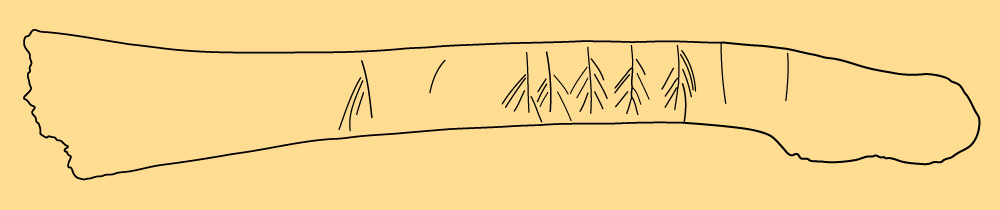
2. ‘3: f u þ o o’ (futhork, in coded runes). Cow rib from Tønsberg. 1200–1300.
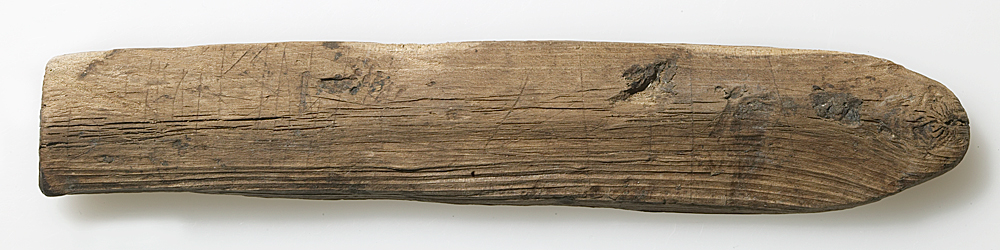
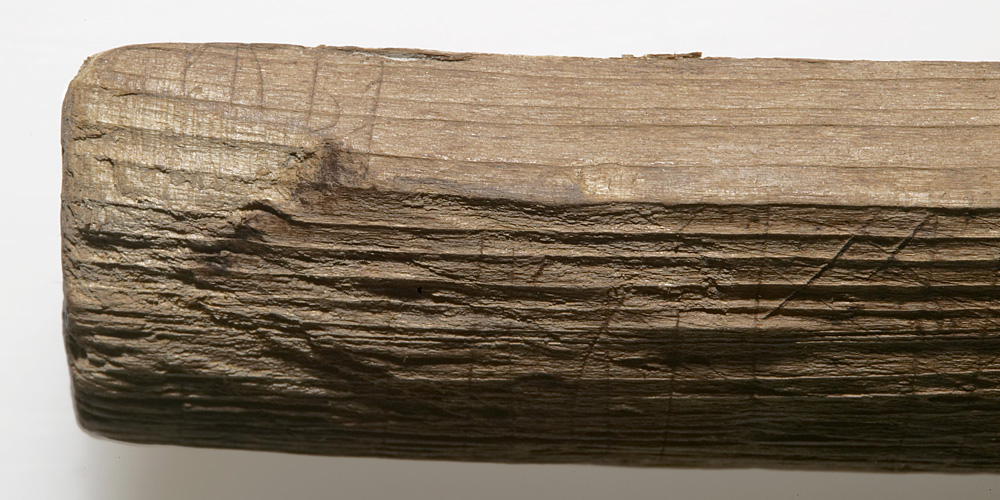
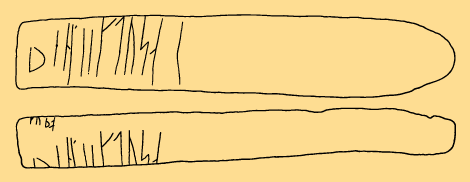
2. ‘3: f u þ o o’ (futhork, in coded runes). Cow rib from Tønsberg. 1200–1300.
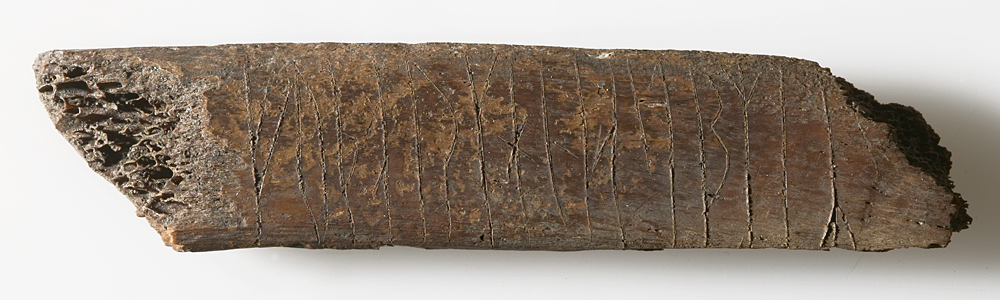
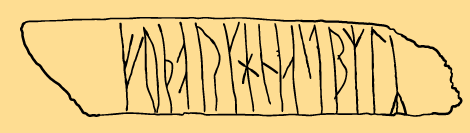
4. ‘fuþorkhniastbmly.’ Rib fragment from Oslo. C. 1075.
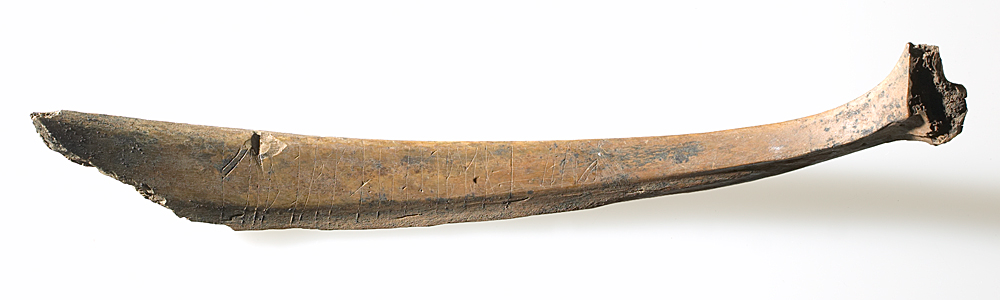
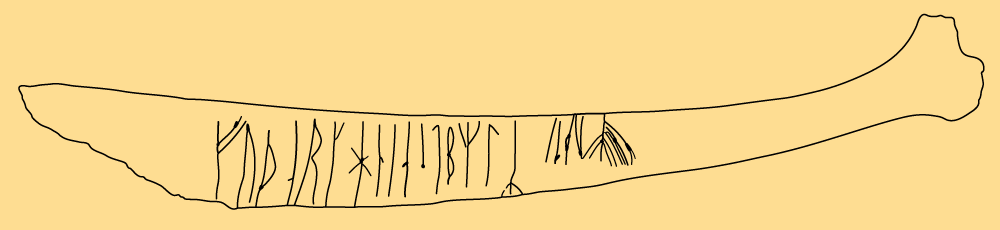
5. ‘fuþorkhniastbmly [with corrections] / fuþoi.’ / [‘bio ta.’] Rib from Oslo. 1250–1300.
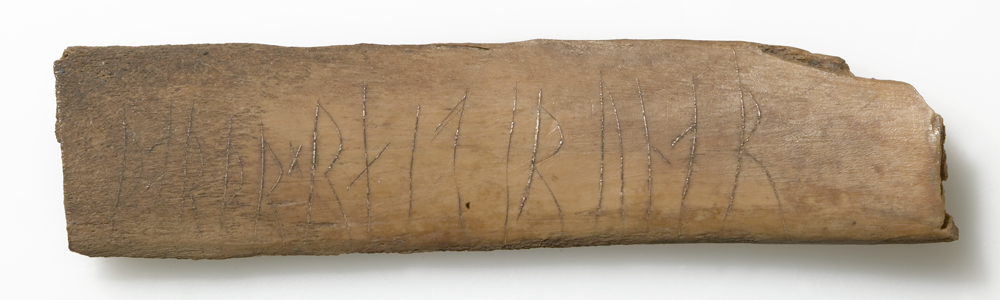
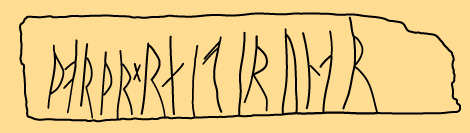
6. ‘Þórðr carved in the runes.’ Rib fragment from Oslo. 1150–1200.
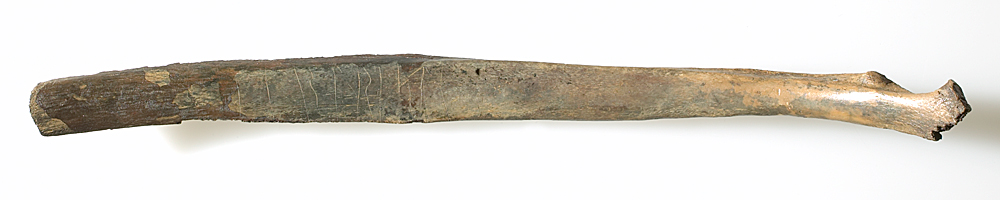

7. ‘Karl carved.’ Rib from Oslo. 1100–1225












