New attitudes about the past – revival
When the past is used as a valuable resource in the present, it can often lead to a revival of old traditions. This influences attitudes about identity and heritage. Today many artists find inspiration in traditional use objects, symbols and rituals related to spiritual life.
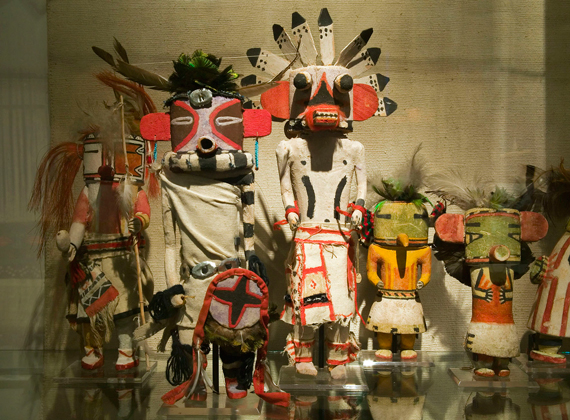
The Hopi has many ancestor spirits called kachina. Kachina figures are a meaningful source of inspiration for Hopi art, central to the Hopi’s cultural heritage and an important expression of identity.
Spiritual life amongst the Hopi
For the Hopi the earth is sacred. Traditional religion is intimately connected to rain and the yearly agricul- ture cycle. Many religious rituals are held to influence the spirits, which the Hopi believe are responsible for weather and nature conditions.
The Kachina-dances among the Hopi
The ritual year is divided in to. In the first half of the year, when corn plants are sown, the Hopi hold kachina dances where masked dancers represent the spirits. The spirits, which are both male and female, visit the Hopi to help them with agriculture and other important matters.
Just after the summer solstice there is the niman ceremony, which is the kachina’s farewell dance. At this ceremony the dancers give candy and gifts to the children. Usual gifts are kachina dolls, which teach chil- dren about the kachinas and to distinguish them from each other.
The Past in the Southwest
The Hopi homes. To protect themselves against attack from their enemies, the Hopi built houses on flat hill plateaus called mesa (which means table in Spanish). The women built and repaired the houses of adobe, which consists of sand, clay, water and other organic materials such as twigs and straw. The houses were built close together with several levels. In aditionto house construction, women were also responsible for food preparation. The men did most of the agricultural work.
Hopi agriculture is based on corn but they also grew beans, squash, pumpkin and cotton. In the dry desert climate, the Hopi were very dependent on rainfall at the right time. As in many societies, the Hopi developed rituals for important aspects of life.












