Ole Solberg was aware of the unique quality of Nampeyo’s work. Nampeyo personally never signed that which she had made. There was a trader, Thomas Keam, who through his company Keam’s Trading Post laid the foundation for trade in Hopi pottery. He had the potters to make decorated tiles with kachina motifs. The tiles are stil popular souvenir objects.
Nampeyo is the first potter from this area who achieved a name for producing ceramics sale. Earlier potters had only produced for use in the household.
She had a well developed sense of her history and highly valued her roots as a potter. Her techniques were superior, which shows especially in her earlier and most productive period. She is best known for her innovativeness in relation to décor, for example as the founder of the Hopi’s special school within Pueblo-ceramics. She was particularly progressive with respect to the commercial possibilities of ceramics. This had a great impact on /was very important to later generations.
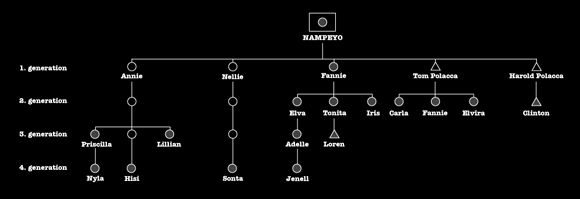
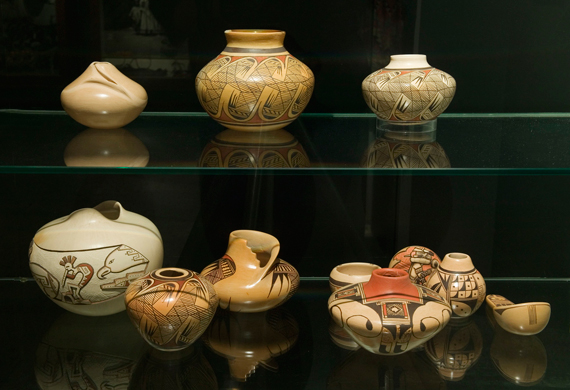
In 2006 Tom Svensson undertook a larger collection of objects focusing only on the descendants of Nam- peyo. Thus we have a biographical collection, with a focus on one type of objects. Collecting over a longer time span shows both continuity and change. This collection, with Nampeyo as its starting point, consists of 42 objects distributed over 21 potters since Nampeyo’s time.
In this expanded collection there are three styles that dominate
- Nampeyo-style, which is performed by those who perfect the heritage according to Nampeyoo.
- Dextra-style, with use of older pot shards as distinctive décor
- Polacca-style the sculptured, almost sculptural style invented by Nampeyo’s grandson Thomas Polacca and further passed on by his nephew, Loren H. Nampeyo – daring and highly innovative.
The vitality in the creative, from traditional heritage, carries Nampeyo’s work forward, because she was also creative with strong roots in the tradition.