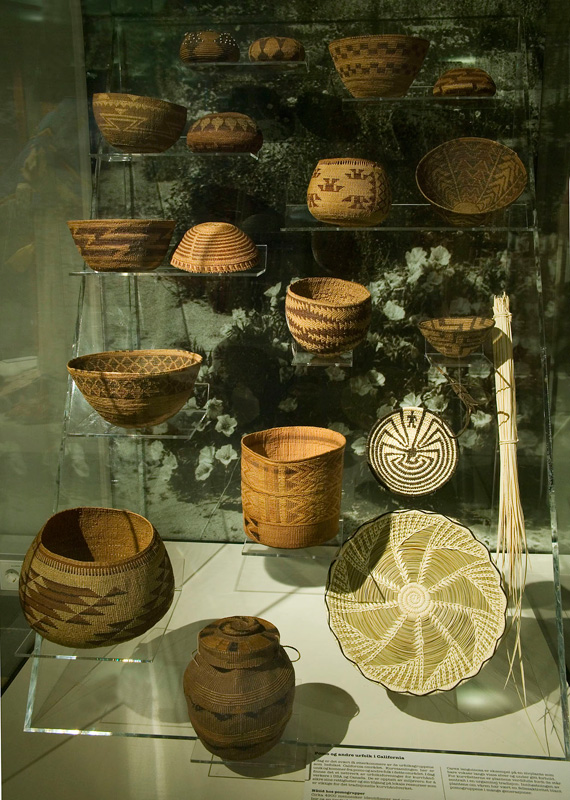
Contemporary Pomo Groups Approximately 4900 people identify themselves as Pomo. Today about one third of these people live on small Rancherias – protected land – or on small reservations in the counties of Sonoma and Mendocino in California. These local societies vary in size from 0 to circa 800 square km, and their populations range from 15 to 400 people.
Living tradition
Local resources are used in basket weaving. For basket weavers among the Pomo, access to local resources is crucial for the survival of this tradition. Over time, the plans have become more rare and many peo- ple who weave baskets trade to obtain and secure the plants that are no lover grow in their local areas.
Carex languinosa is an example of a reed plant that only grows along certain rivers and under specific conditions. For basket weavers these plants are valuable because they are central to an ancient tradition. The harvesting of the plants in the spring has been a group activity amongst the Pomo for many generations.












