Fort Good Hope – a heritage site
Fort Good Hope is the oldest trade market in the lower Mackenzie Valley area. The local community runs a school and hotel. Today hunting, fishing and small animal trapping are still important activ- ities for residents.
Trade network create contact
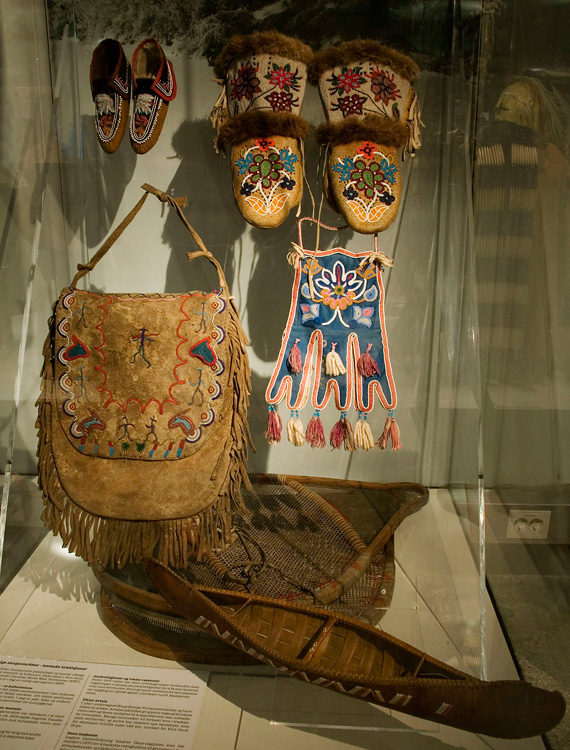
Indigenous groups in the northern forest area participated in an ex- tensive trade network. Already in the 1600s the French settlers be- gan to trade European goods that indigenous people desired for fur and skins. Guns were important for hunting and war against oth- er groups. Glass beads were used to decorate among other things clothing.
The Hare
The Hare people live in the north- ern forest area, the western sub- arctic, which includes most of Can- ada and Alaska. The Hare consist of several groups with common language and cultural traits. They have been fur hunters for centu- ries.
Land rights and local resources
Since the 1970s several indigenous groups have negotiated with the Canadian government over land rights to gain more control over their territories. Several groups mobilized against plans to build oil pipes in the area around the Mackenzie River.
Unclear agreement
In 1921, representatives of King George V signed and the Hare signed an agreement. The agreement affected the group’s access to local recourses and their ability to maintain their nomadic way of life.
Many people would like to continue to live in their traditional territories; others have established new villages, such as Colville Lake 142 km, northeast of Fort Good Hope.
Dene Nation
Today’s Hare-group belong to the Dene nation which was established in 1970 to protect the rights of the groups of the Athapaskian language group. The Dene nation fights for greater control over their local resources and self-determination.












