Pilgrim festival creates community
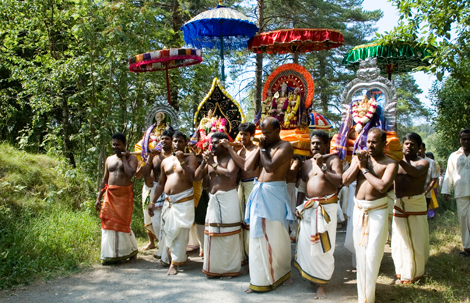
Thousands of Tamil Hindus gather in Oslo every year for a ten-day festival at the temple in Ammerud. During the festival, the statues of the gods are carried in procession to Vesletjern Lake, where they are bathed and cleansed.
The ritual transforms the lake into a sacred place for the faithful.
Pilgrimages to sacred lakes and rivers are an important part of the Indian religious tradition. Perhaps Vesletjern Lake will become a place of pilgrimage for Hindus from Norway and other countries in the future?
Sacred and disputed
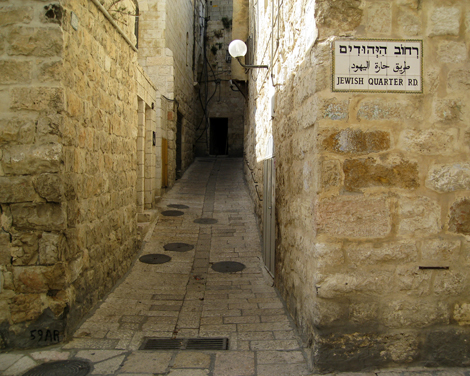
Jerusalem has been the spiritual and geographical centre of Judaism for almost three thousand years. Jews traditionally made pilgrimages to the temple in Jerusalem three times a year to pray and offer sacrifices. The most important festival was Pesach (Passover), which commemorates the escape from Egypt. After the temple was destroyed by the Romans in 70 AD, many Jews moved to other parts of the Roman Empire. Jerusalem remained a Roman city for a long time. Later it was conquered by Christians and Muslims.
The western wall of Herod’s temple is still standing. Many Jews visit this wall to pray and to lament the fate of the Jewish people throughout history. For this reason it is known as the Wailing Wall. Today the Al-Aqsa Mosque and the Dome of the Rock are both located on the site of the temple. Jerusalem is also a holy city for Muslims.
After the collapse of communism in 1989, Eastern Europe has opened up to Jews searching for their roots and identity. Some go to see the villages or ghettos their ancestors had left in previous centuries. Others visit the graves of celebrated rabbis who lived in the 1700s and 1800s. Many Jews feel the need to have visited one of the World War II Nazi death camps during their lifetimes.
Some important sites in Jewish history are located in politically disputed areas. For example, the Tomb of the Patriarchs where Abraham, Isaac and Jacob are buried is located in Hebron, outside the borders of Israel. The tomb is visited by Jews, Muslims and Christians alike. These shared pilgrimage sites are often drawn into political conflicts, increasing the level of discord.
The Mecca of football

Hundreds of Norwegians travel to England every weekend to watch their favourite teams in football’s homeland. These football pilgrims are totally familiar with the rituals they will take part in when they arrive at their destination. After landing at the airport, they follow a predetermined route to their team’s part of town, stadium, and the club museum. The holiest sites are the dressing room, the players’ bench and the grandstand.
On the evening before the match, supporters gather in local pubs, where spirits are high. Football is the only subject of conversation. If you mention anything else, says a Liverpool fan, you won’t get an answer. The fans, decked out in shirts and scarves, are completely focused on their team. Your social status is of no importance here. You belong to an extended community of your peers.
Football fans too bring souvenirs home from their pilgrimages. Objects such as match tickets, team strips or models of the stadium are carefully packed for the return trip. These things could have been ordered over the Internet, but when purchased at the team’s stadium they gain a sacred aura.
The most fortunate are those who manage to get hold of a true “relic”, such as a piece of the pitch or a player’s autograph. Once back home, some of these pilgrims display their newly-acquired treasures in a manner that resembles an altar.
Walk on, walk on
With hope in your heart
And you’ll never walk alone
You’ll never walk alone
Liverpool’s anthem accompanies many football fans throughout their lives, and is sung at both weddings and funerals.












