The display contains several examples of rune-like signs, mostly from the town of Tønsberg, carved on animal bones. While it took time to prepare a piece of wood for use as a proper rune-stick, just about anyone could take a knife and doodle on a discarded bone. Rune-sticks were mainly used by those who had something to say.
The lead tablet here is a Christian amulet covered exclusively with rune-like signs. The inscription was surely made by a cheat who reckoned that his customers could not read Latin.
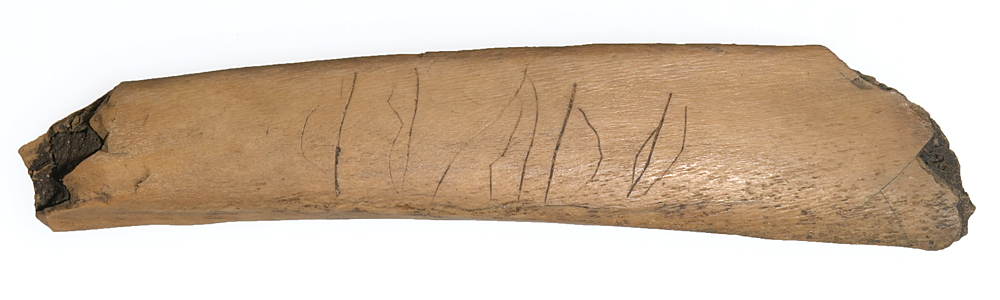
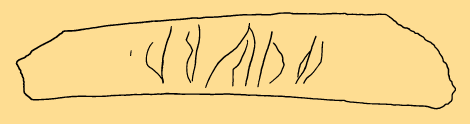
1. Rune-like signs. Cow rib fragment from Oslo. 1175–1225.
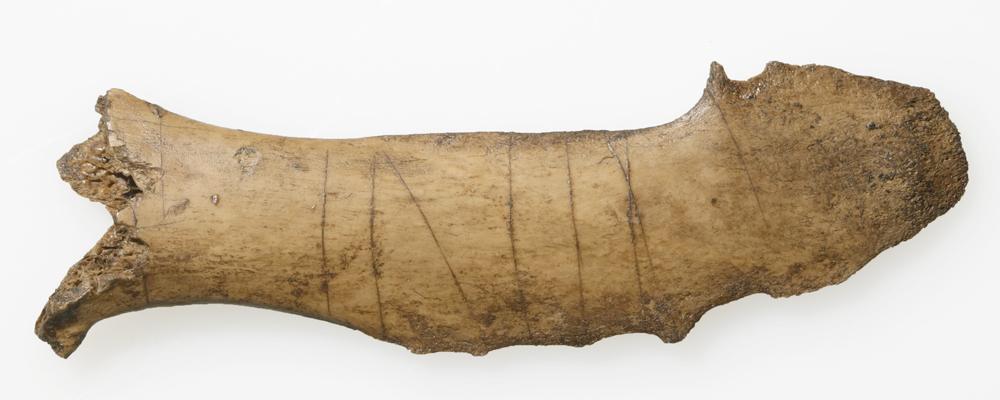
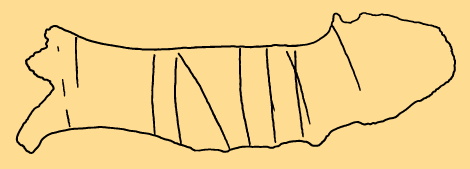
2. Rune-like signs. Rib fragment from Tønsberg. 1250–1300.
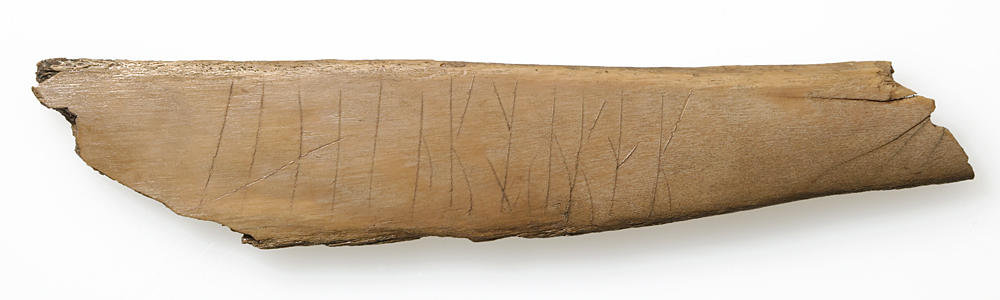
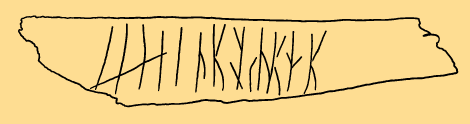
3. Rune-like signs. Rib fragment from Oslo. 1175–1225.
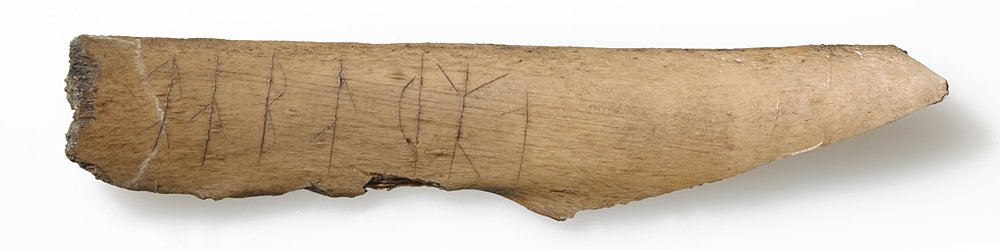
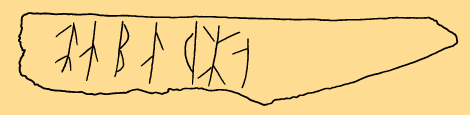
4. Rune-like signs. Rib fragment from Tønsberg. 1200–1300.
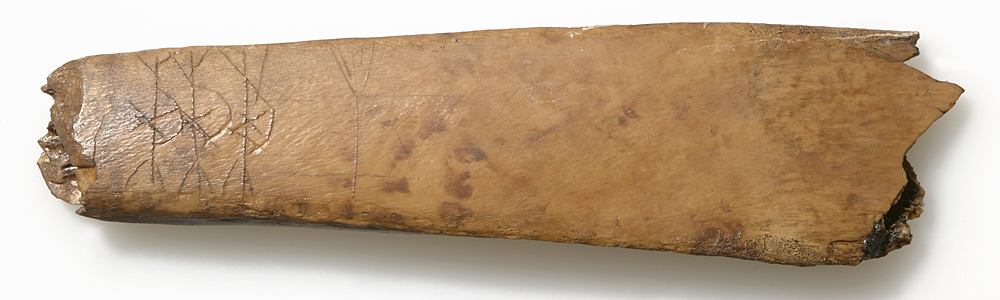
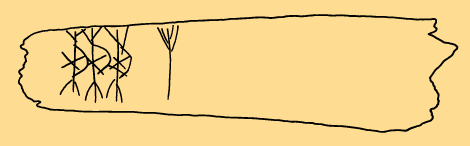
5. Rune-like signs. Rib fragment from Tønsberg. 1100–1150.
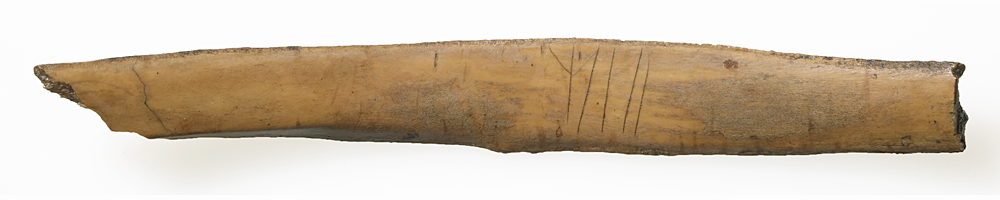

6. ‘m||||’ (Maria?). Rib fragment from Tønsberg. 1200–1300.
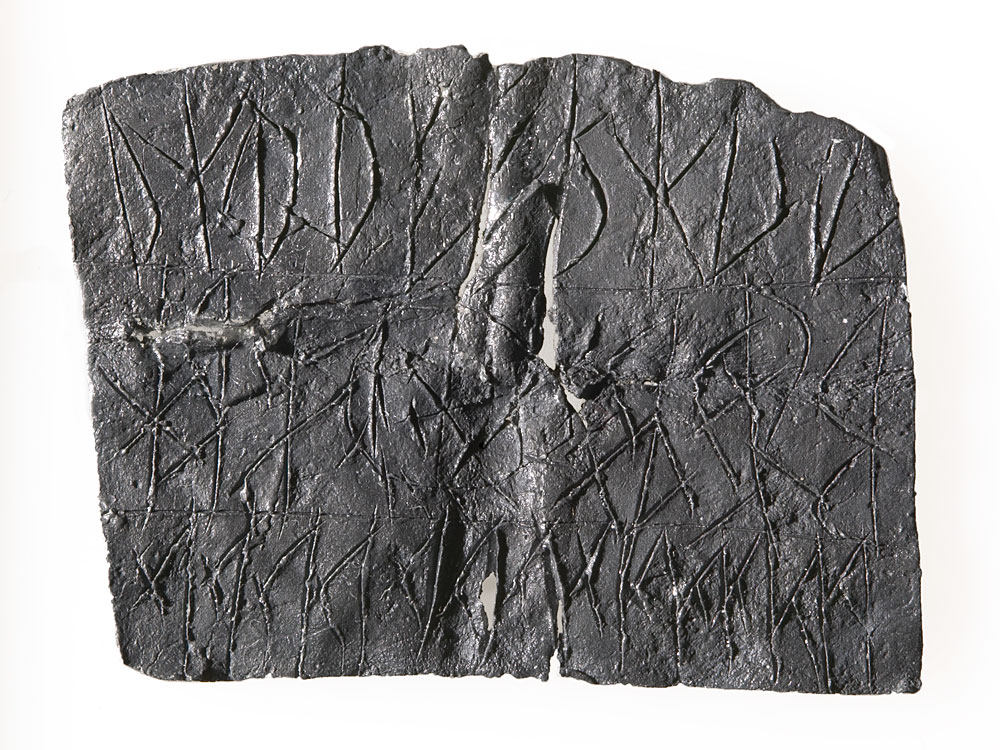
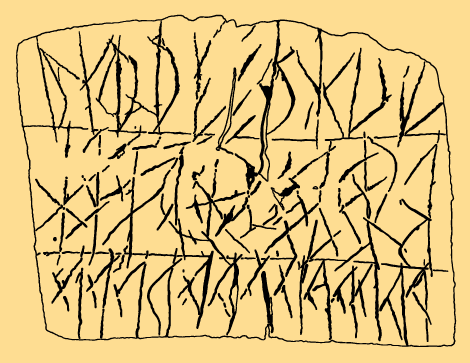
7. Rune-like signs. Lead tablet from Torkelsby. 1200s/1300s?
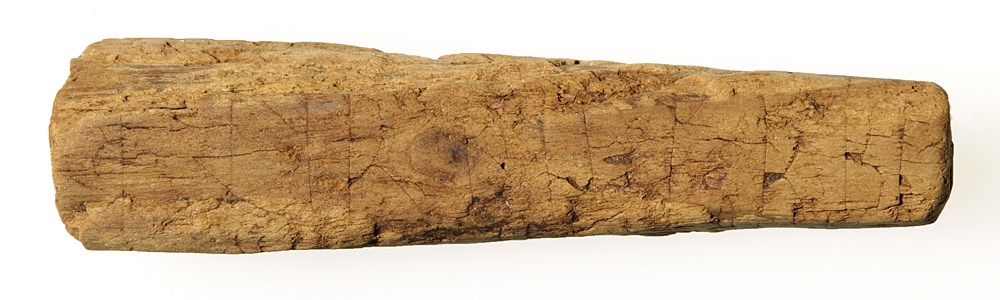
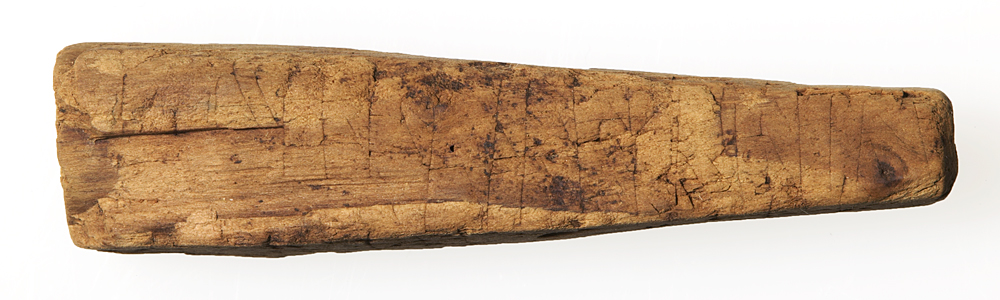
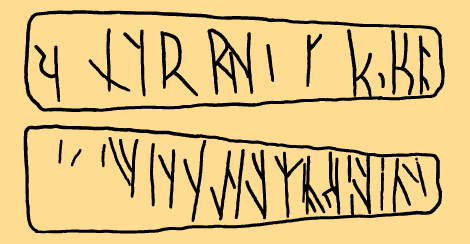
8. Illegible rune-like signs. Four-sided wooden stick from Tønsberg. 1250–1300.
All photos: Eirik Irgens Johnsen © Museum of Cultural History












