One of the Church’s fiercest opponents, King Sverrir, won a battle near Bergen in 1194. Some of the defeated troops fled the country by way of Telemark. Two of their leaders stopped in Vinje and carved runes in the planks of the stave church. One inscription contains a skaldic poem. The long wooden pieces displayed here were cut out when the church was demolished in 1796.
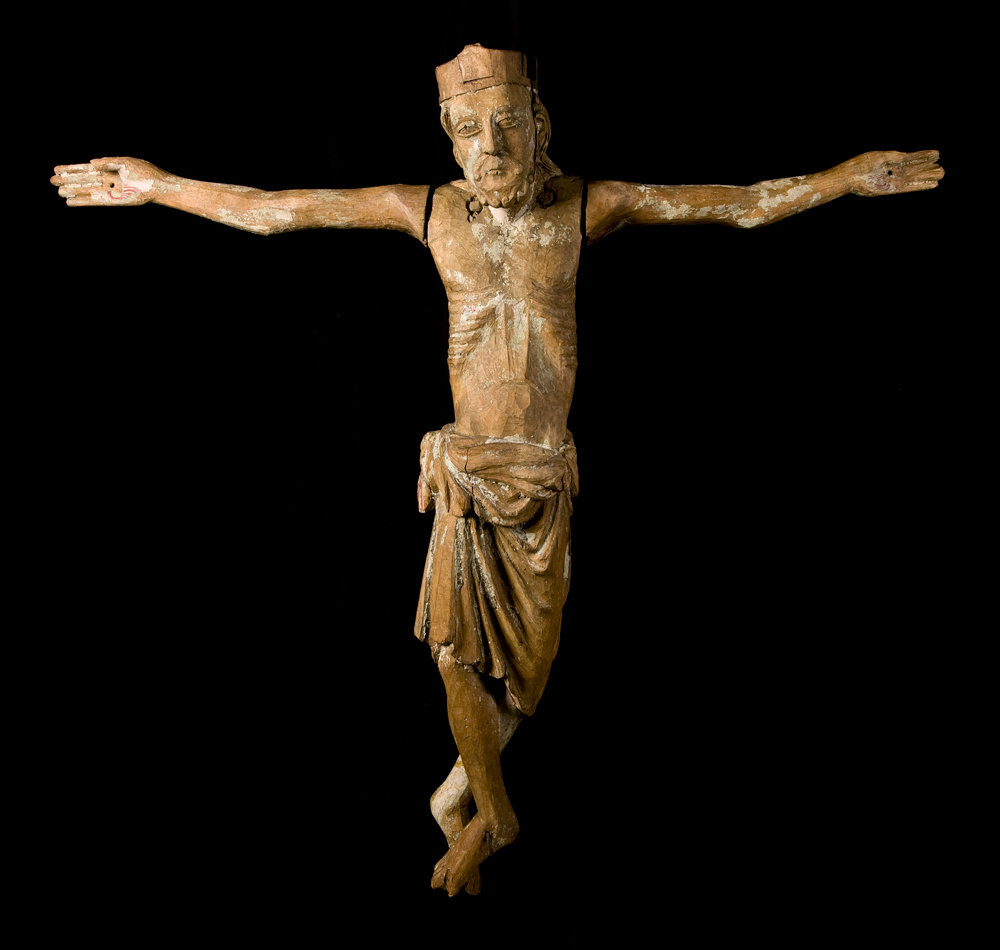
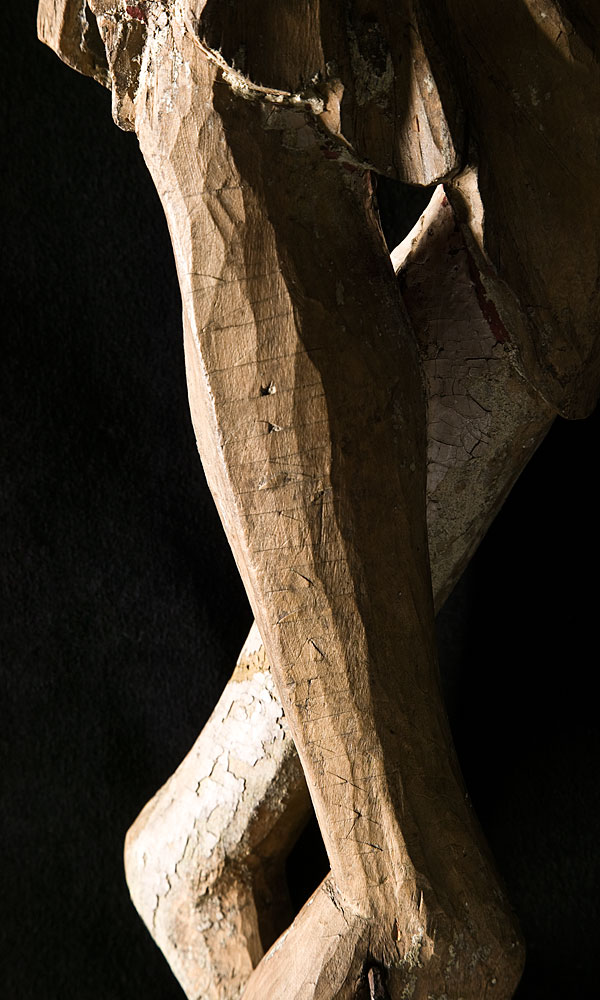
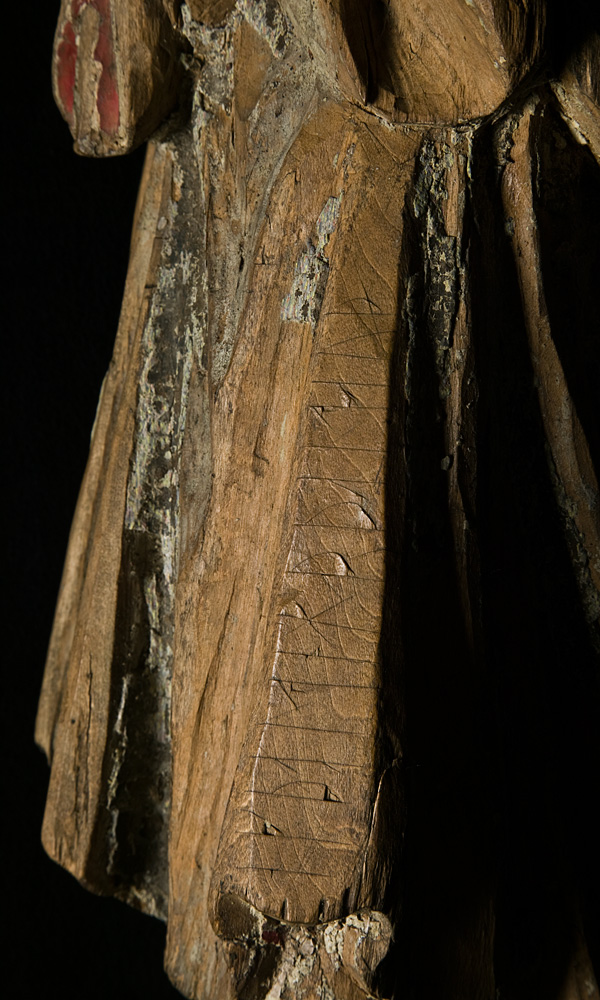
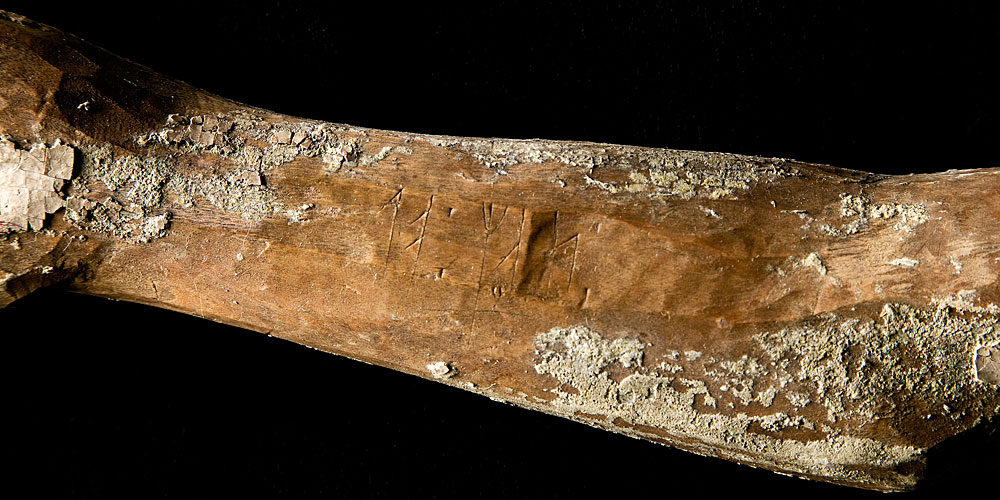
For the Church, Christ was the King of Kings. The statue of the victorious Christ in the display is from a crucifix. It has runes on the right leg and on the fold of clothing identifying the figure on the cross. Near the right wrist is the name ‘Thomas’, the apostle who doubted the resurrection of Christ until he saw the nail holes for himself.


1. ‘Sigurðr Jarlsson [stepbrother of King Magnús Erlingsson] carved these runes on Saturday after the Mass of Bótolfr [17 June] when he had fled here and would not make peace with Sverrir, his father’s and brothers’ killer.’ Part of a plank from Vinje Stave Church. 1194.


2. ‘Hallvarðr Grenski carved these runes. Never is he fortunate, the wretch who betrays; one should expect him to get sorrow on the hair-part’s turf (i.e. on his head); he will pay for this broken oath. The sea-warrior’s hawks have not fallen completely through the baleful deeds of ogresses; they maintain defiance of heart.’ Part of a plank from Vinje Stave Church. 1194.
Photos: Mårten Teigen © Museum of Cultural History
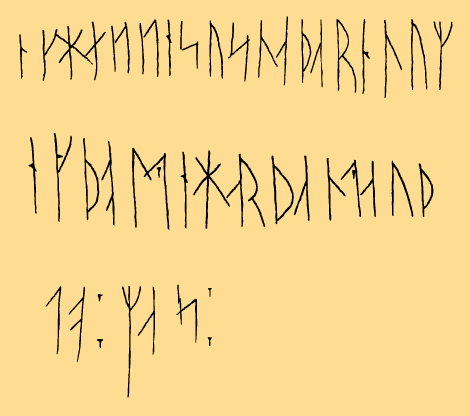
3. ‘My name is Jesus of Nazareth. I suffered a hard death.’ ‘Thomas.’ Figure of Christ from a crucifix from Lunder Church. C. 1240.












