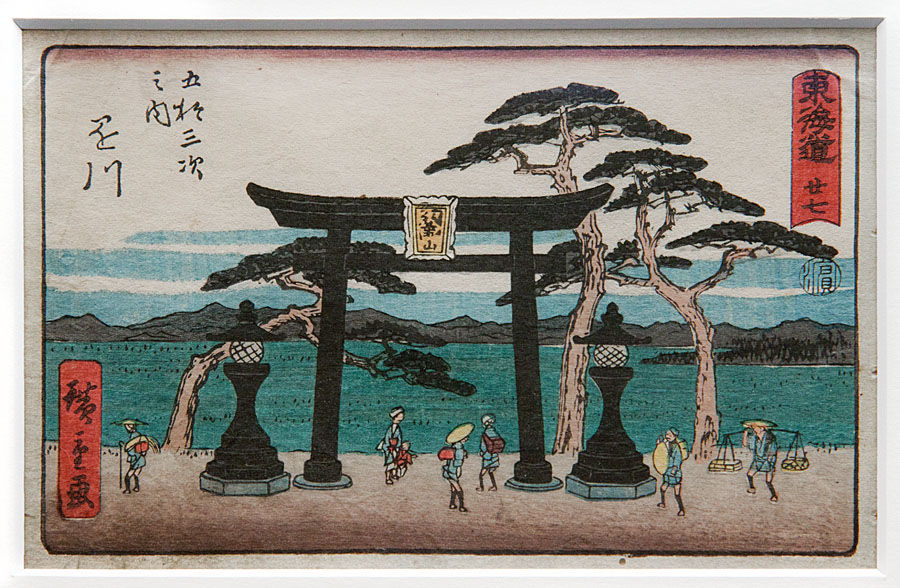
- Series: “Fifty-three Stations on the Tôkaidô Road (Station #27)” also known as the “Tôkaidô of Aritaya”
- Tôkaidô gojûsan tsugi no uchi 東海道 五十三次之内 廿七;
- Aritaya-ban Tôkaidô 有田屋版東海道
- 1843 – 47&
- Publisher: Aritaya Seiemon有田屋清右衛門 (active mid-19th c.)
- Signature: Hiroshige ga 廣重画
- Marks: censor’s seal (Hama)
- Format: horizontal quarter of large-size print (yotsugiri)
- Medium: multicolor woodblock print (nishiki-e); ink and colors on paper
The motif of this print by Hiroshige is the castle-town of Kakegawa in today's Shizuoka Prefecture. Travelers along the Tôkaidô highway cross the threshold of a Shinto shrine.
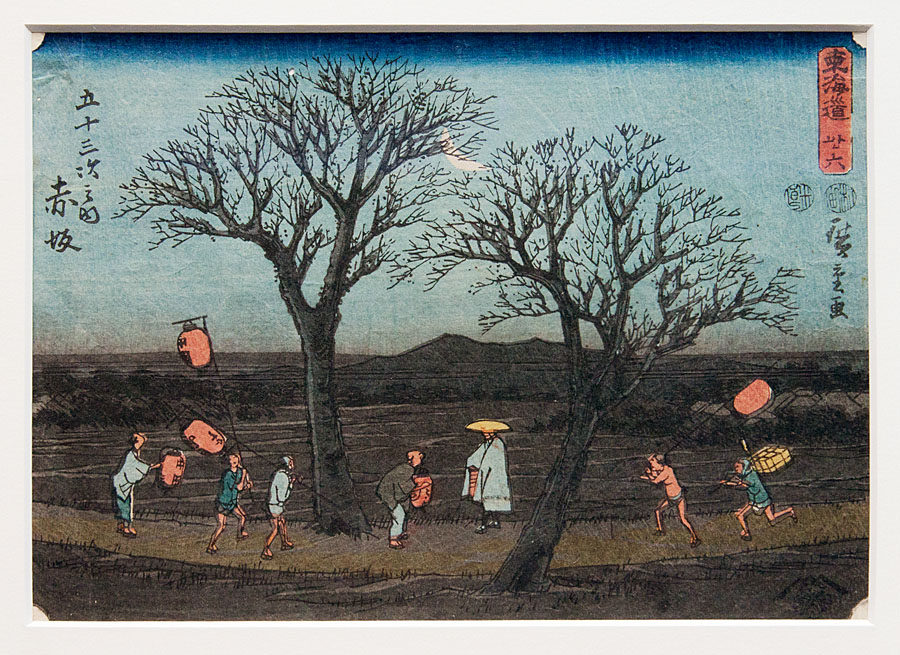
- Series: “Fifty-three Stations on the Tôkaidô Road (Station #36)”
- Tôkaidô gojûsan tsugi no uchi (36) 東海道 五十三次之内 三十六
- c 1850–51
- Utgiver: Tsutaya Kichizô 蔦屋吉蔵 (Kôeidô; aktiv ca. 1830 – 1859)
- Signature: Hiroshige ga 廣重画
- Marks: censors’ seals (Murata, Mera)
- Format: ink and colors on paper (chûban yoko-e)
- Medium: multicolor woodblock print (nishiki-e); ink and colors on paper
The numbered stages along the Tôkaidô Road were places for rest and entertainment. The Akasaka guest house was famous for its meshimori onna – women who not only served food but also offered entertainment and companionship.
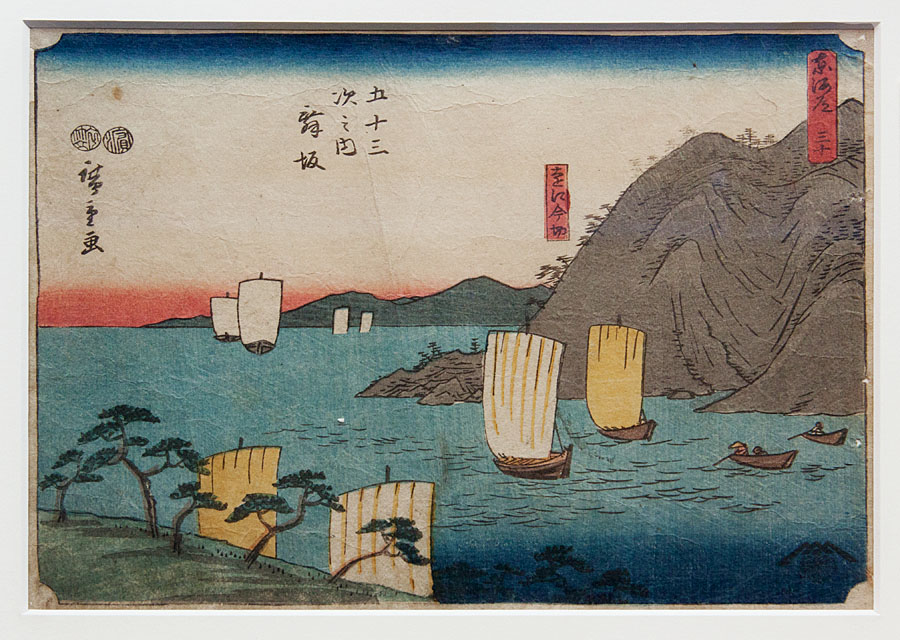
- Series: “Fifty-three Stations on the Tôkaidô Road (Station #31)”
- Tôkaidô gojûsan tsugi no uchi (31) 東海道 五十三次之内 三十一
- c 1850–51
- Publisher: Tsutaya Kichizô蔦屋吉蔵 (Kôeidô; active c 1830 –1859)
- Signature: Hiroshige ga 廣重画
- Marks: censors’ seals (Hama, Kinugasa)
- Format: horizontal middle-size print (chûban yoko-e)
- Medium: multicolor woodblock print (nishiki-e); ink and colors on paper
Travelers had to be ferried from the station at the fishing village of Maisaka (#31) to the Arai station (#32). Military tactics may have favored routes across bays and rivers. It would have been a strategy the shogunate (feudal regime) used to trap its enemies.












