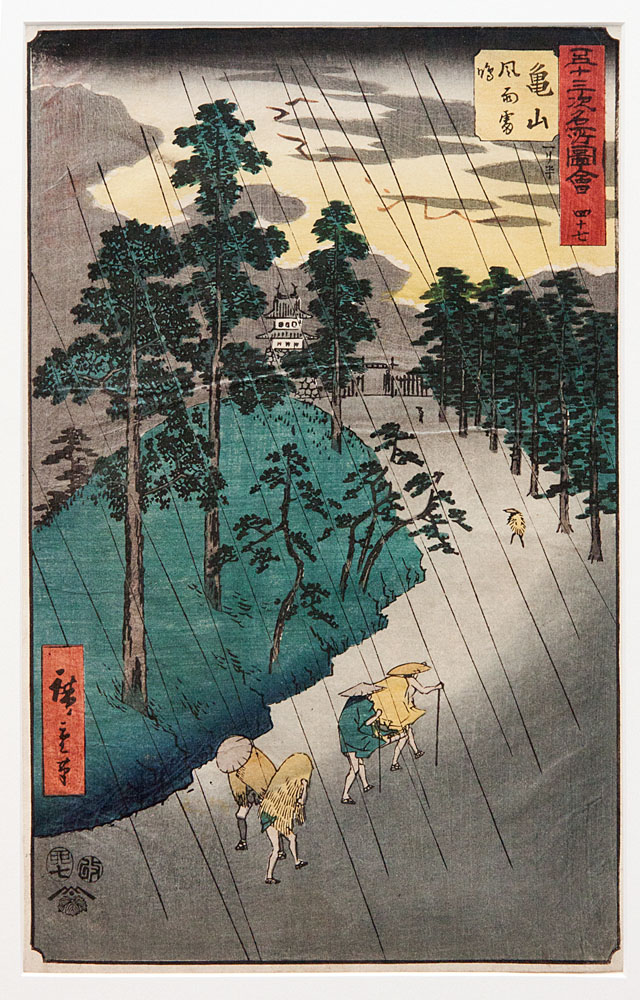
- Series: “Famous Sights of the Fifty-three Stations”
- Gojûsan tsugi meisho zue 五十三次名所図会
- 1855
- Signed: Hiroshige hitsu 廣重筆
- Marks: censor's seal (aratame), date seal, publisher's seal
- Publisher: Tsutaya Kichizô蔦屋吉蔵 (Kôeidô; active c 1830 – 1859)
- Format: vertical large-size print (ôban tate-e)
- Medium: multicolor woodblock print (nishiki-e); ink and colors on paper
A scene from the 47th station along the highway connecting Edo and Kyoto: travelers weathering a storm on their uphill journey to Kameyama Castle. By choosing a vertical rather than horizontal format for the landscape, Hiroshige emphasizes depth of view and contrast.
On loan from The National Museum of Art, Architecture and Design, Oslo.
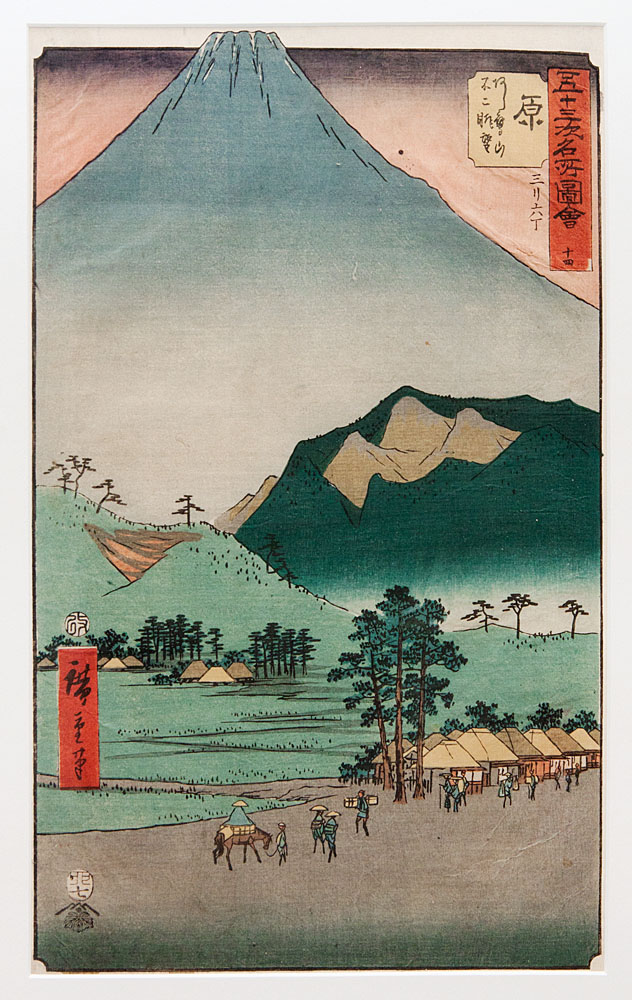
- Series: “Famous Sights of the Fifty-three Stations” also known as the “Vertical Tôkaidô” Gojûsan tsugi meisho zue 五十三次名所図会
- 1855
- Signed: Hiroshige hitsu 廣重筆
- Marks: censor's seal (aratame), date seal, publisher's seal
- Utgiver: Tsutaya Kichizô 蔦屋吉蔵 (Kôeidô; active c 1830 – 1859))
- Format: vertical large-size print (ôban tate-e)
- Medium: multicolor woodblock print (nishiki-e); ink and colors on paper
Hiroshige's use of the vertical format creates the effect of Mt. Fuji towering over the travelers along the road.
On loan from The National Museum of Art, Architecture and Design, Oslo.
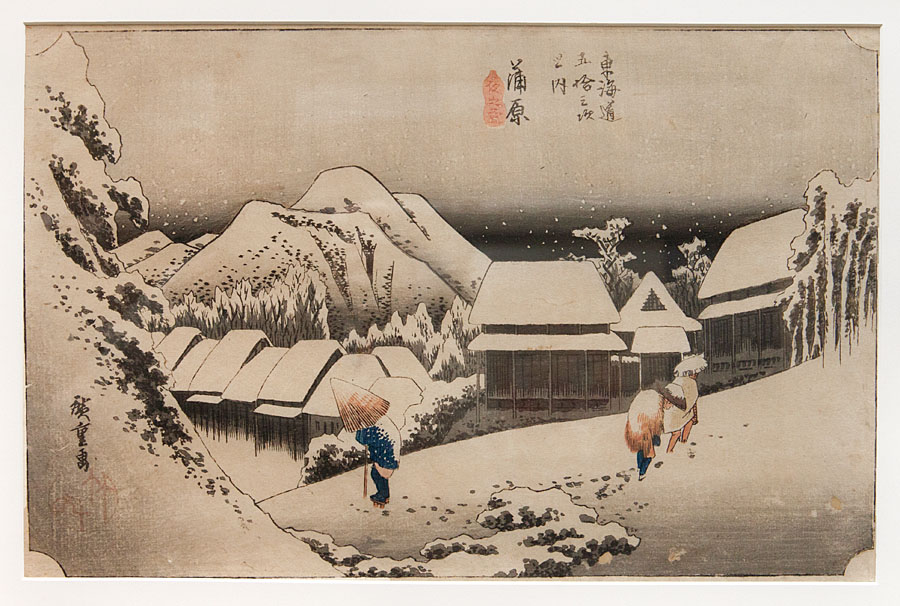
- Series: “Fifty-three Stations on the Tôkaidô Road”
- Tôkaidô gojûsan tsugi no uchi 東海道五十三次之内
- c 1833 – 1834
- Signatur: Hiroshige ga 廣重画
- Marks: censor's seal (kiwame), publisher's seal
- Publisher: Takenouchi Magohachi 竹内孫八 (Hoeidô; active c 1833 – 1850)
- Format: horisontalt trykk i stor størrelse (ôban yoko-e)
- Medium: multicolor woodblock print (nishiki-e); ink and colors on paper
Hiroshige’s landscapes are poetic. As a writer of diaries and poems, he was the most lyrical of the ukiyo-e masters and the first to make readily available landscapes and seascapes of the Eastern sea road.
Meanwhile, he never captured the view of evening snow at Kanbara with his own eyes. His achievement was to create a semblance of reality through poetic imagination. The truthful representation of an activity and its meaning is sometimes more important than the truthful representation of the landscape itself.
On loan from The National Museum of Art, Architecture and Design, Oslo.












