Many of the designs used in contemporary Aboriginal art are derived from traditions, patterns and Dreamtime stories that can be traced back 50,000 years. These patterns were applied in ritual contexts, and were painted on bodies, in the sand, on cave walls and on sacred wooden objects.
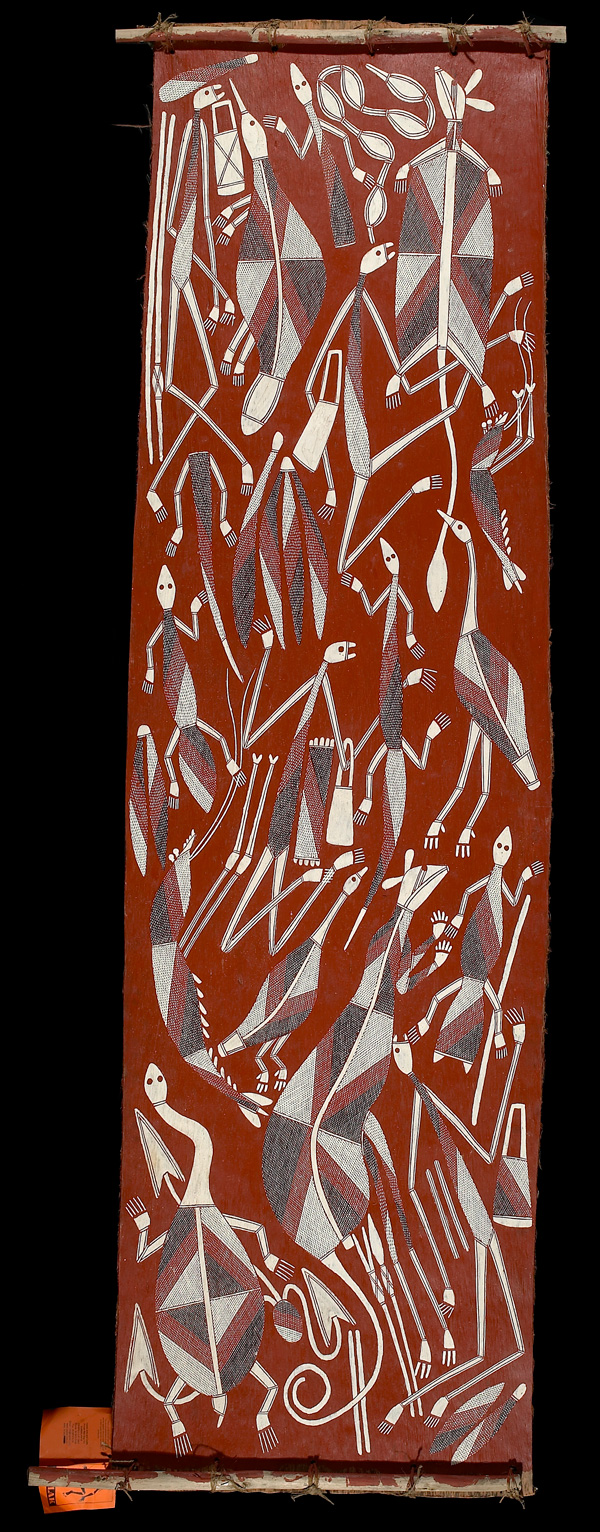
The three bark paintings illustrate this continuity: the two large bark paintings are contemporary works, produced in 2010, while the small bark painting has been in the museum for many years. All three bark paintings show clear similarities in the use of media and designs - the small kangaroo is present in both the older and the new bark paintings. All three bark paintings come from the Arnhem Land region.
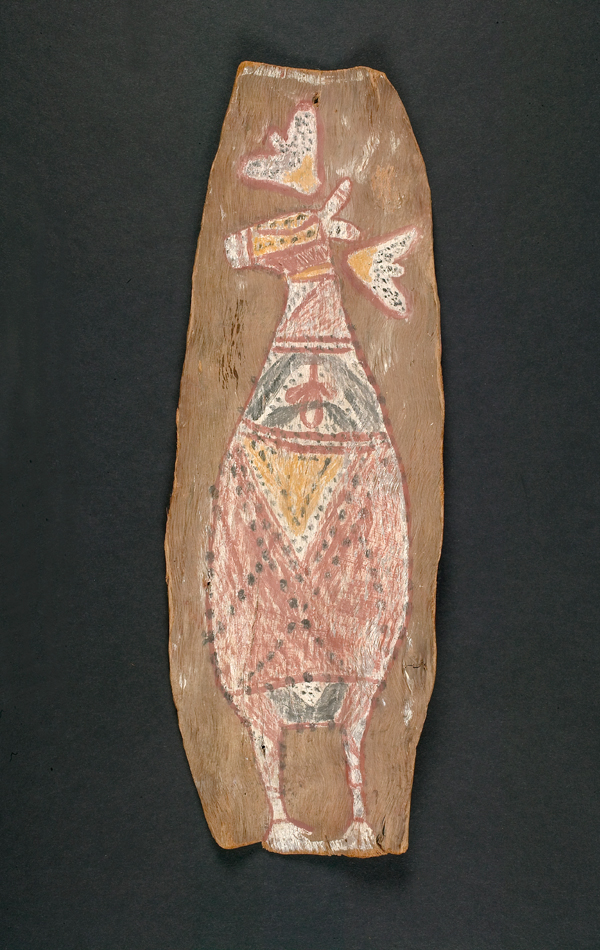
Contemporary artists from Arnhem Land have made a conscious decision to paint with ochre on pieces of eucalyptus bark as their ancestors did. Their designs are quite similar to old cave paintings in both style and content. The differences between the old and the new paintings are related to the artists´ intentions when producing the work, and to the recognition of Aboriginal art by the international art world. The older bark painting was made to be used in rituals and was purchased by the museum as an ethnographic artefact representing Aboriginal culture.
Contemporary Aboriginal painters see themselves as artists producing art for sale. They depict traditional stories but often allow their personal styles to influence the design. These paintings are now recognised by galleries and museums as works of art with aesthetic as well as culturally-specific value.












