Maria Josette Orsto 1962
Tiwi. Japajapunga
Tiwi Design
Nguiu Bathurst Island,
Tiwi Islands, North region,
Northern Territory
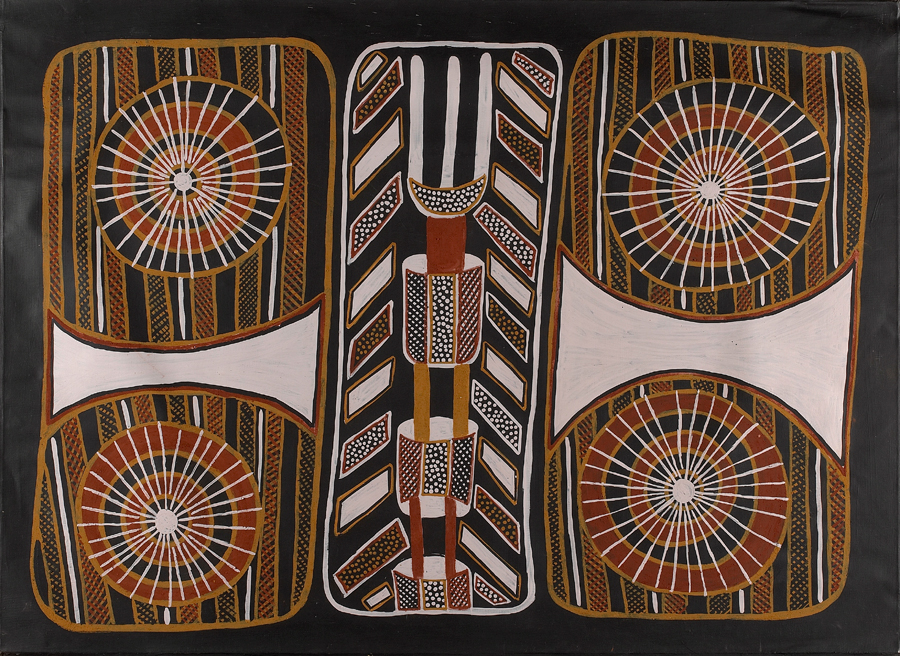
Kulama
Yam / sweet potato ceremony
Acrylic and ochre on canvas
”This painting is about the Kulama Ceremony. Back in the Dreamtime, not long before the death of Purrukapali, when all animals and birds were still men and women, Purutjikini, a boobook owl man and his wife Pintoma decided to perform the first Kulama ceremony. The white-headed sea eagle Jirakati was the first initiate and still wears the ceremonial paint on his feathers. They gave the ceremony the form that it has today, with the preparation of cheeky yam, which is a round root vegetable found in the surrounding monsoon forest. It is highly poisonous when not properly prepared.
When a golden ring forms around the moon during the final stages of the wet season Japara the moon man is performing Kulama. Inside this ring a multitude of star people sing and dance Kulama songs. This is the time to prepare for Kulama, the annual celebration of life. All the elders gather first to set up the camp and prepare the Kulama ceremony site. When the site is ready the elders walk around and sing out to all the spirits and ancestors to let them know we are here. Then we all sing and dance all night until morning. In the morning we go down to the jungle to dig up and collect the Cheeky Yams.
We take the yams back to the Kulama ceremony site. Then we dig a large hole in the centre. This hole is filled with rocks and wood, we light a fire. When the fire is burnt down we place the yam on the hot rocks and the coals and burry it. The yam cooks in this ground oven all through the night until the next day. During this time we sing the Kulama ceremony song. We sing for our country and land, and we sing to our ancestors that they will guard and protect us when we go out bush. In the afternoon the cooked yam is shared. All the participants eat it, which will give them good health until the ceremony is repeated next year.
Some of the yam is rubbed on the arms and legs of little children, to make then strong, safe, and healthy all their lives. The younger ones are also given their aboriginal name during this ceremony, which lasts for three days.”
Iconographic explanation: The large circles in the painting represent the Kulama ceremony circle that the participants dance inside. It is also an abstract symbol for Tiwi spiritual beliefs.












