Bildekarusell
-
 June 6, 2023
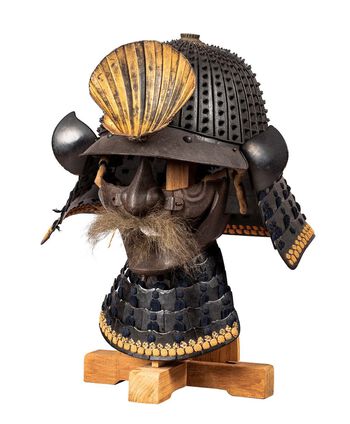
Helmet crests, or “maedate”, often depicted animals a warrior could identify with, or that had qualities, like strength or endurance, that were good to have on the battlefield. This helmet from the 1500s is decorated with a scallop shell. An interesting choice!
-
 June 6, 2023
Between the blade and the grip of a sword is the handguard. It protects the hand from being struck and from slipping down onto the sharp blade. They could be small works of art, especially after 1600 when the civil wars ended, and swords were mostly for show.
-
 June 6, 2023
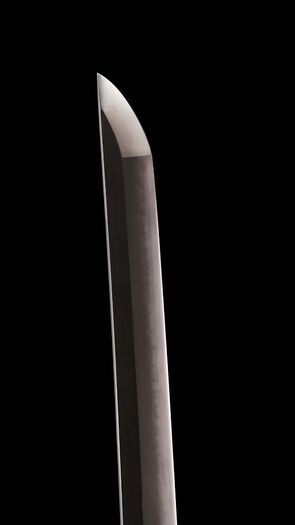
This sword blade looks like it was made last week. In fact, it’s from 1864.
-
 June 6, 2023
Front and back of a signal fan. It was used by an officer to direct samurai warriors during a battle.
-
 June 6, 2023
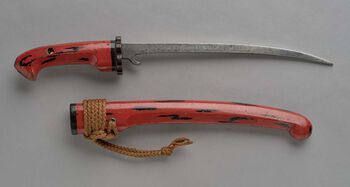
This is a «hachiwari», or a helmet breaker. Its name makes it clear what it was used for. It is heavy and has a hook that could break apart metal, almost like a can opener.
-
 June 6, 2023
A sword that hangs from the belt this way, is called a “tachi”. A samurai used it when he visited the emperor’s court, among other things.
-
 June 6, 2023
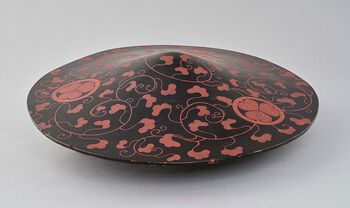
Helmet of a foot soldier, “jingasa”. It has the round emblem, “mon”, of the Tokugawa family. For 270 years, they were the most powerful family in Japan.
-
 June 6, 2023
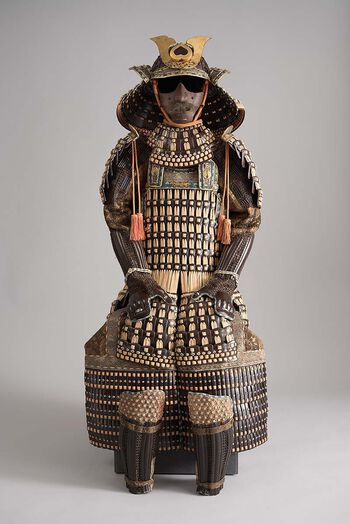
This suit of armour was given as a present to Roald Amundsen on his lecture tour in Japan in 1927. He was among the first to use airplanes and airships to explore polar regions. This was of great interest to Japan and Amundsen is said to have been called “The Giant”. He later gave the suit of armour to the Historical Museum.
-
 June 6, 2023
The helmet crest on the front of the forehead symbolises a scythe used to cut rice, “kuwagata”. In the middle is an upside-down heart, actually the stylised eye of a wild boar.
-
 June 6, 2023
Laces with tassels and knots are highly decorative. But their real function was to stop the flapping and clattering of loose armour parts – perhaps especially when riding at a full gallop.
-
 June 6, 2023
The curve of the sword blade has been perfected for cutting. The blade itself is from 1600 or a little earlier and is worn with use. The other parts were added in the 1800s.
-
 June 6, 2023
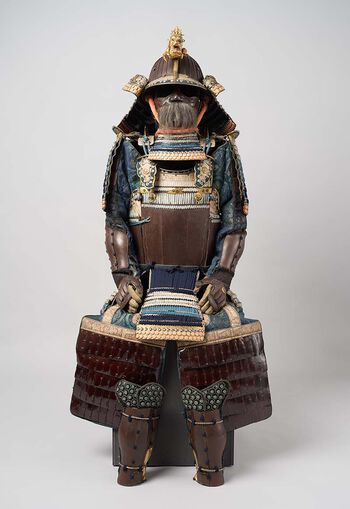
This suit of armour came to the museum already in 1884, just a few years after the samurai were forced to lay down their swords for good.
-
 June 6, 2023
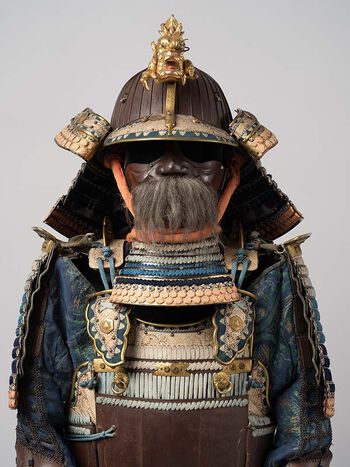
The face was protected by a mask with a detachable nose piece. Moustaches made of the bristle of wild boar, or the hair of yaks or horses made the masks look fierce and frightening.
-
 June 6, 2023
These horns make sure the warrior is visible in the heat of battle, through the clouds of smoke and dust. The samurai did not use uniforms so it was important to be able to tell who was friend and who was foe.


