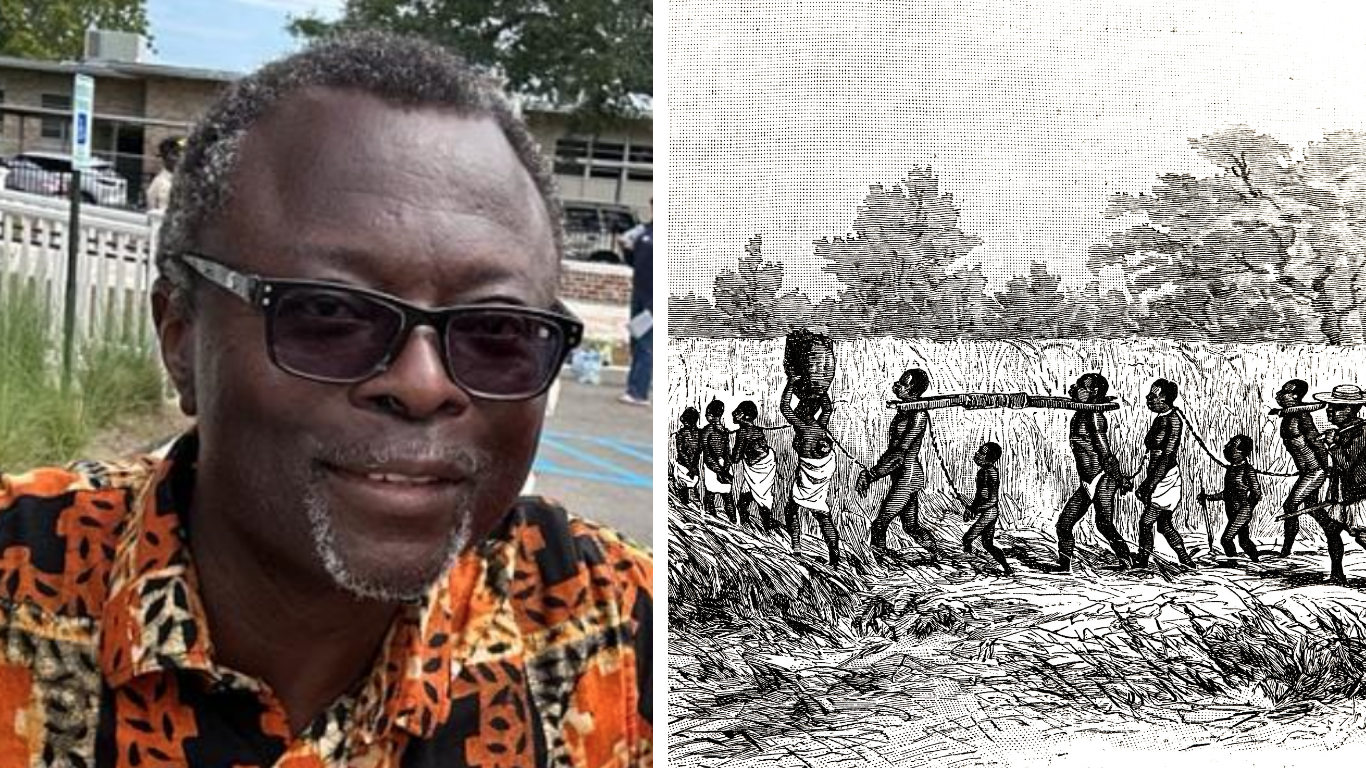
The history of the transatlantic slave trade is often told from a European perspective. This lecture shifts the focus to Africa.
From the very first Portuguese incursions in the 15th century, African kings, armies, and coastal communities organized resistance against slave raids and deportation. Armed forces defended their territories, coastal populations attacked slave ships, and rulers such as the Oba of Benin, King Agadja of Dahomey, and Queen Nzinga in Central Africa fought determined battles against European expansion.
Drawing on historical sources, Dr. Gnammankou highlights a powerful and often overlooked reality: Africans were not passive victims of the slave trade, but active agents who resisted for centuries—at great cost.
Join us for an important and thought-provoking lecture that re-centers African voices in global history.
About the lecturer
Dieudonné Gnammankou is Assistant Professor at the University of Abomey-Calavi in Benin and founder and scientific director of the Akanga Cultural Center in Porto-Novo. He specializes in the history of the African Diaspora, Africa, and Europe. He earned his Ph.D. in 2000 from École des Hautes Études en Sciences Sociales.
An internationally recognized expert on Alexander Pushkin and his African ancestry, Gnammankou has produced groundbreaking research on Pushkin and his great-grandfather, Abraham Hannibal, work that has significantly advanced the field. His current work explores Africans in European cultural history and African kings who resisted the slave trade. He is also editorial manager of DAGAN Editions (Benin–France) and serves as a historical consultant for films and radio programs in Europe, Brazil, the United States, and Africa.